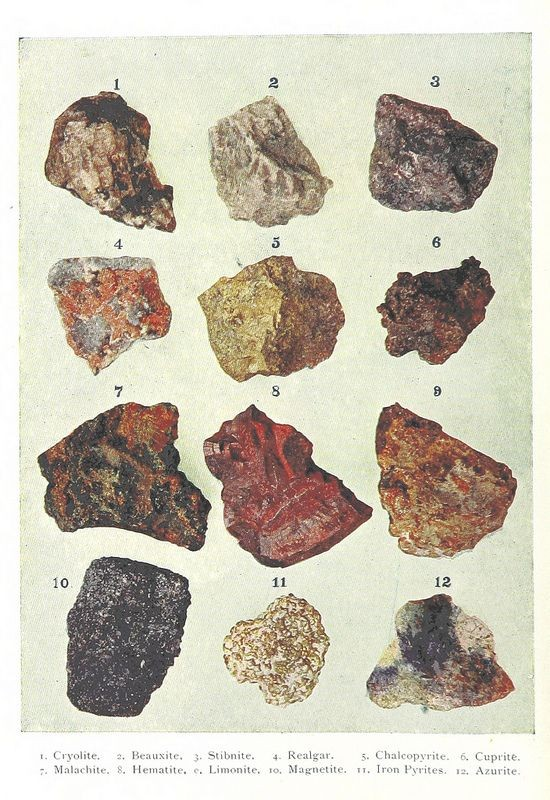
Numbered Mineral Specimen Plate
A vintage scientific plate arranges twelve rough mineral specimens in a quiet, catalog-like grid on a pale greenish ground. The visual feel is dry, tactile, and archival: granular rock textures are rendered with mottled color and print-softened edges, while small serif numerals and a bottom legend impose order on irregular natural forms. The palette is earthy and oxidized, moving through rust red, ochre, black, gray, dull gold, and mineral blue-green, with the layout balancing specimen display and classroom taxonomy.
Visual index
Form irregular mineral silhouettesfragmentary chunkssmall serif numeralsrectangular plate formattaxonomic specimen arrangement
Mood archivaldidacticquietly empiricalcabinet-of-curiosities restraintnatural history classroom calm
Color oxidized reds and brownsdull ochre and goldcharcoal blackpale green-gray backgroundmuted mineral blue and green accents
Texture granular lithographic mottlingcrystalline specklingrough fractured surfacesaged paper softnessprinted halftone-like color
Composition three-column specimen gridnumbered catalog layoutisolated objects on plain fieldbottom identification legendeven spacing with slight organic variation
Related images
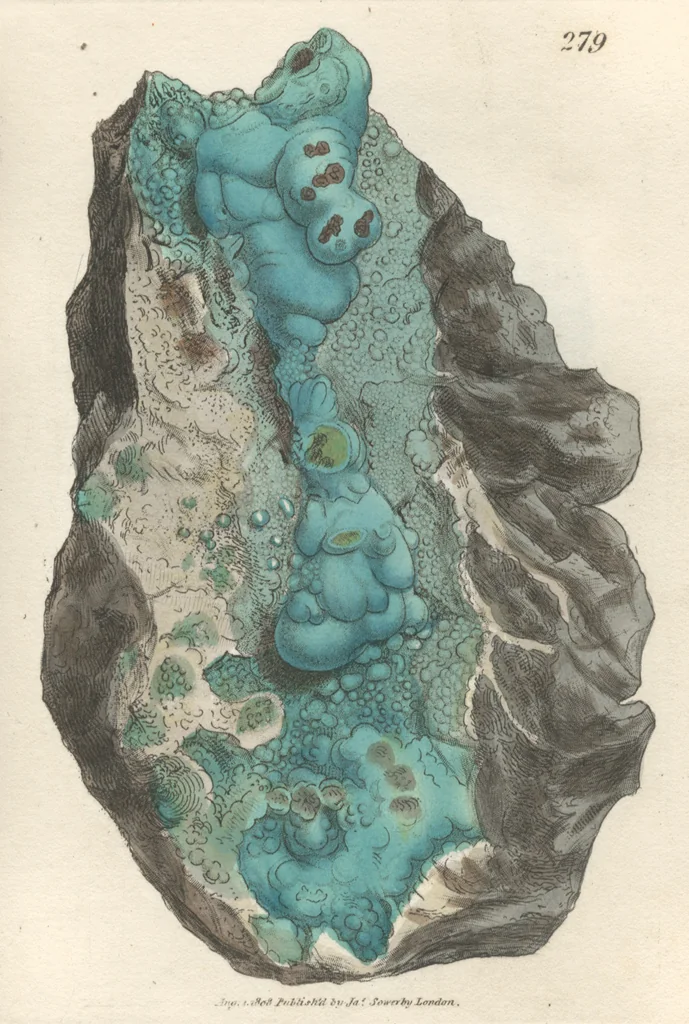
bonhams.comcultural lineage
Victorian mineralogical illustration
James Sowerby, British Mineralogy, 1804–1817
Look for the way each rock is treated as a self-contained specimen: irregular contour, colored interior texture, and enough blank space to let the object read as evidence rather than scenery.
Shared isolated rock specimens, scientific captioning, earth-toned mineral color, natural irregular silhouettes, archive-plate presentation
Different more refined hand coloring, often fewer specimens per plate, cleaner engraved outlines
Image search
James Sowerby British Mineralogy coloured plate minerals
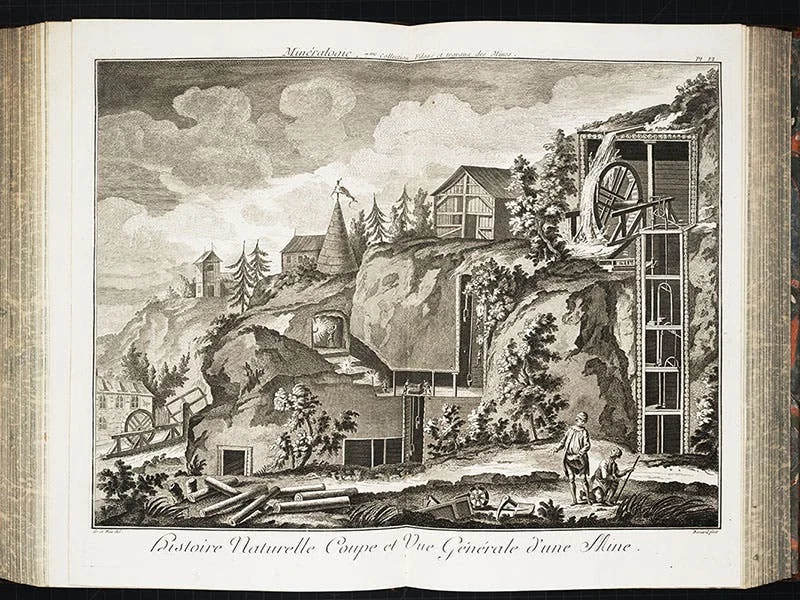
lindahall.orgcompositional relationship
Encyclopédie taxonomic plate
Diderot and d'Alembert, Encyclopédie mineralogy plates
Attend to the numbering system, the neutral page field, and the separation between visual specimens and textual key; the page functions as a diagram of classification.
Shared numbered entries, specimen-to-legend structure, educational ordering, plain background, taxonomic display
Different mostly monochrome engraving, more diagrammatic linework, less coloristic texture
Image search
Encyclopédie Diderot mineralogy numbered plate
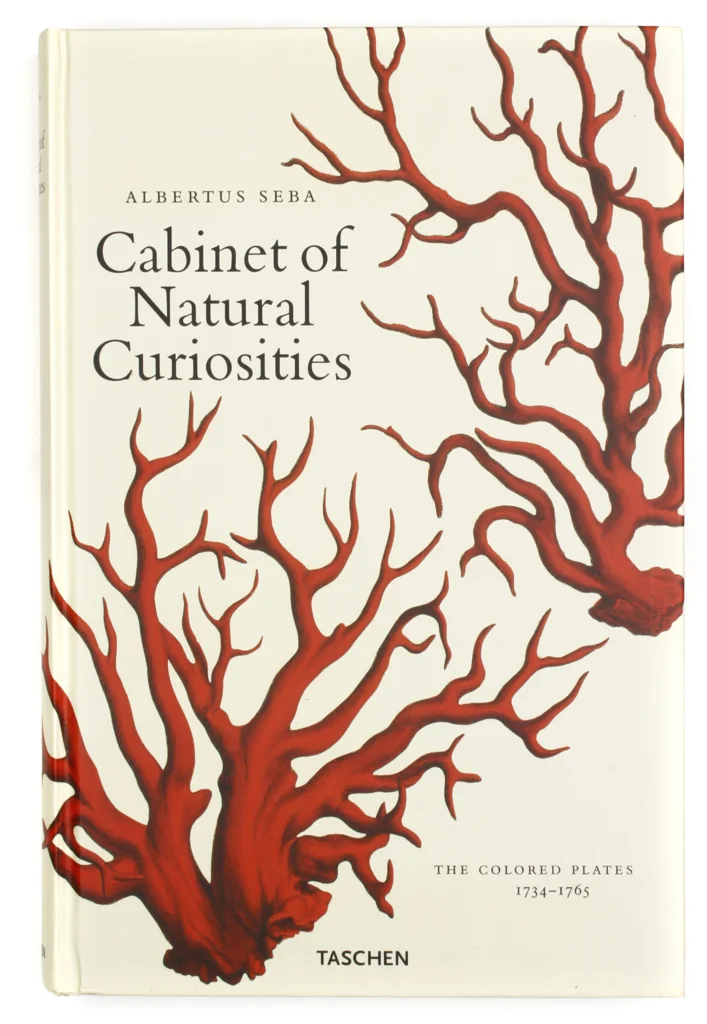
antiqueprintmaproom.comcultural lineage
Cabinet of curiosities natural history plate
Albertus Seba, Cabinet of Natural Curiosities, 1734–1765
Notice the display logic: the page becomes a cabinet drawer, with specimens distributed for comparison rather than composed into a natural scene.
Shared specimen display, numbered natural objects, collector's-page format, neutral presentation space, comparison-driven layout
Different more baroque abundance, broader range of organisms, decorative eighteenth-century engraving
Image search
Albertus Seba Cabinet of Natural Curiosities numbered specimen plate
period relationship
Educational wall chart natural history
Maison Deyrolle mineralogy school charts
Look at the calm instructional hierarchy: object first, label second, with color and spacing used to make a collection readable from a distance.
Shared classroom didactic tone, labeled natural specimens, muted educational palette, ordered comparative layout, scientific illustration heritage
Different larger poster scale, usually cleaner typography, more deliberate graphic framing
Image search
Deyrolle minéralogie educational wall chart minerals
formal echo
Art science serial morphology
Ernst Haeckel, Kunstformen der Natur, 1899–1904
Compare the repeated isolated forms, the use of numbering, and the tension between scientific indexing and decorative page rhythm.
Shared serial natural forms, numbered plate convention, balanced page spacing, scientific visual taxonomy, aestheticized observation
Different more symmetrical composition, biological rather than geological forms, more ornamental line quality
Image search
Ernst Haeckel Kunstformen der Natur numbered natural forms plate
contrast reference
Modernist object taxonomy photography
Karl Blossfeldt, Urformen der Kunst, 1928
Notice how isolation and repetition make natural fragments feel almost sculptural; compare that to the rock plate's emphasis on mineral surface and classification.
Shared isolated natural specimens, neutral background, comparative viewing, emphasis on surface structure, scientific restraint
Different black-and-white photography, botanical subject matter, stronger modernist abstraction, less textual labeling
Image search
Karl Blossfeldt Urformen der Kunst isolated plant photograph