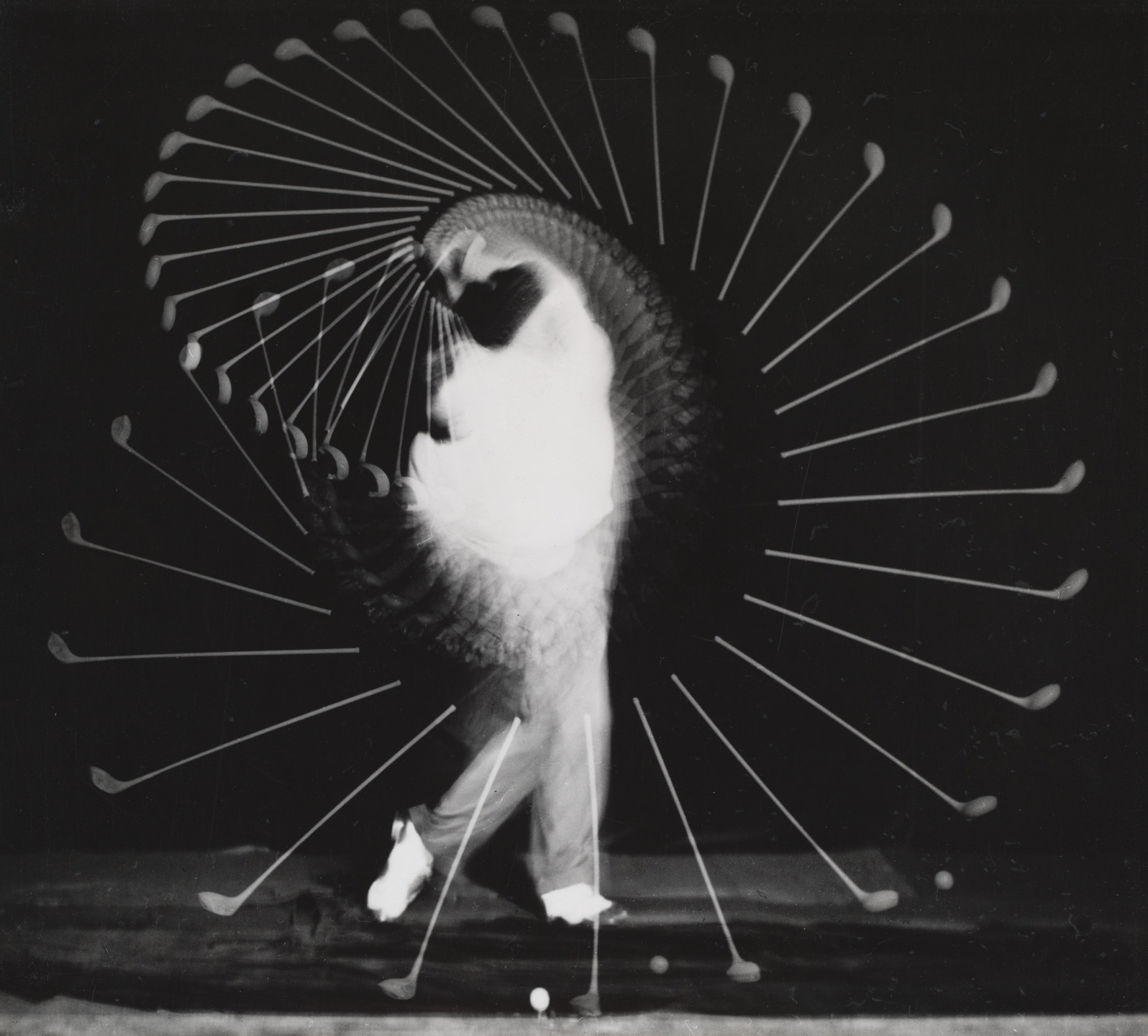
Densmore Shute Bends the Shaft
A high-contrast black-and-white image built from repeated exposures, where motion becomes a graphic halo of thin white spokes against a deep black field. The composition is centered and theatrical, with the body blurred into a luminous core while the repeated club positions create a precise radial diagram. Its visual feel sits between scientific measurement, stage performance, and modernist abstraction: grainy photographic texture, hard light, velvety shadows, and a mood of controlled kinetic spectacle.
Visual index
Form repeated linear arcsluminous body silhouettespoke-like club positionsblurred anatomical massprecise motion diagram
Mood technicalspectraldynamicmodernistperformative
Color monochrome black and whitebright white highlightsdeep black negative spacesoft gray motion trails
Texture silver-gelatin grainsoft motion blurstroboscopic ghostingsmooth dark backgroundglowing overexposure
Composition central figureradial fan structuredark theatrical backdropdiagrammatic repetitionstrong circular implied geometry
Related images
Smarthistorycultural lineage
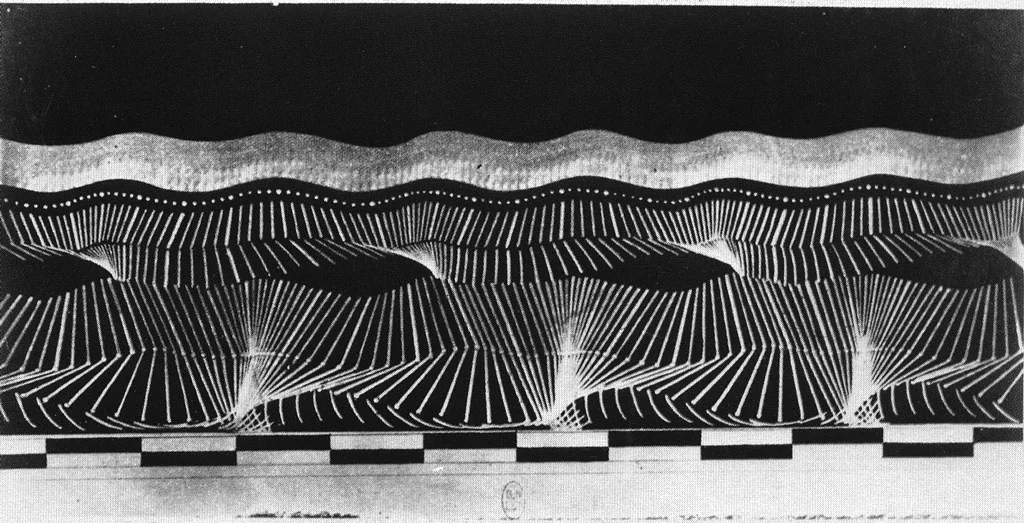
Chronophotographic motion study
Étienne-Jules Marey, chronophotographs of athletic movement, late 19th century
Look for the way time is compressed into one frame, turning a moving body into a sequence of overlapping silhouettes and vectors rather than a single frozen pose.
Shared sequential motion capture, black ground, scientific visualization, overlapping body positions, time made visible
Different more clinical presentation, less dramatic lighting, less radial composition, earlier photographic technology
Image search
Étienne-Jules Marey chronophotograph man walking black background
MeisterDruckeperiod relationship
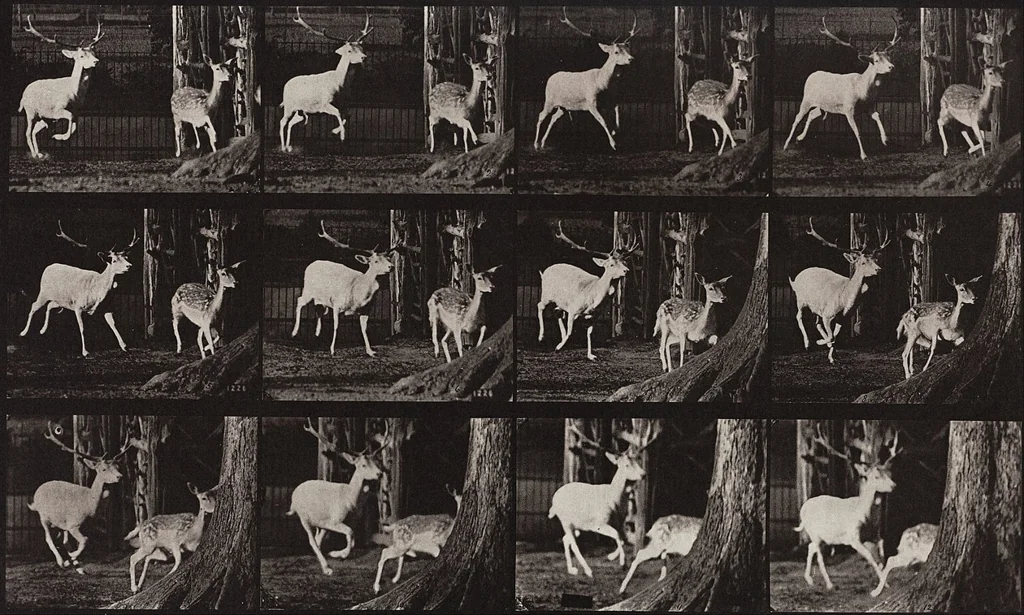
Sequential photographic analysis
Eadweard Muybridge, Animal Locomotion plates, 1887
Compare the segmented phases of movement: Muybridge separates time into adjacent frames, while this image stacks the phases into a single theatrical field.
Shared motion decomposition, photographic evidence, athletic body study, repeated positions
Different gridded plate format, separate frames, brighter studio setting, less abstract geometry
Image search
Eadweard Muybridge Animal Locomotion plate athlete sequence
The Independentformal echo
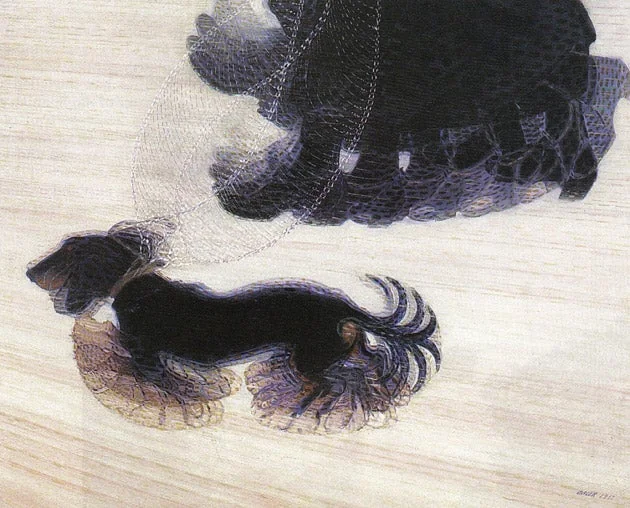
Futurist motion painting
Giacomo Balla, Dynamism of a Dog on a Leash, 1912
Attend to the repeated limbs and arcs that create a fluttering sensation, making motion feel like a visual vibration across the surface.
Shared repeated contours, kinetic rhythm, blurred movement, modern fascination with speed
Different painted color surface, urban leisure subject, horizontal movement, less photographic precision
Image search
Giacomo Balla Dynamism of a Dog on a Leash 1912 painting
Philadelphia Museum of Art Custom Printsformal echo
Modernist time-and-motion abstraction
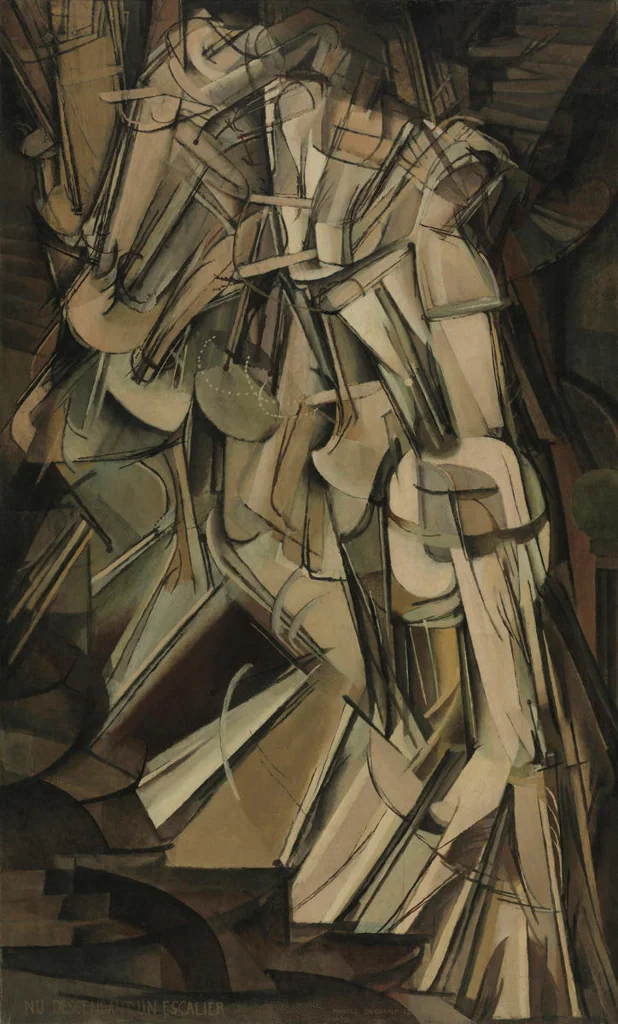
Marcel Duchamp, Nude Descending a Staircase, No. 2, 1912
Look at how a body becomes an accumulation of phases, with anatomy subordinated to rhythm, trajectory, and temporal layering.
Shared body as motion sequence, layered forms, mechanical rhythm, modernist abstraction
Different cubist painted structure, warm brown palette, stair-step composition, less direct photographic trace
Image search
Marcel Duchamp Nude Descending a Staircase No 2 1912
mutualart.commedium reference
Bauhaus light experiment
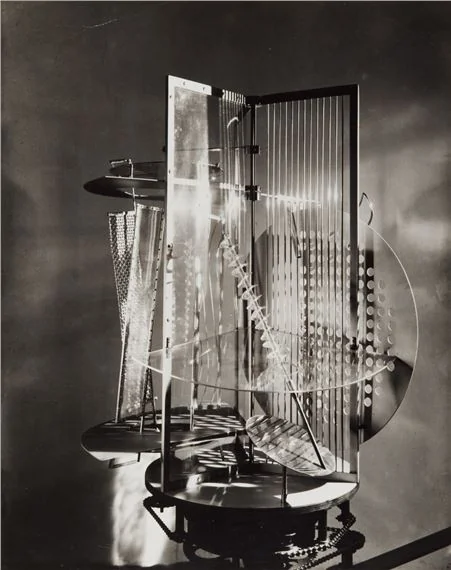
László Moholy-Nagy, Light-Space Modulator photographs, 1930s
Notice how light is not merely used to reveal objects; it becomes the main graphic material, producing lines, halos, and abstract spatial rhythms.
Shared light as drawing tool, black-and-white experiment, mechanical modernity, abstract spatial pattern
Different machine sculpture source, more geometric abstraction, less human performance, constructivist display logic
Image search
László Moholy-Nagy Light-Space Modulator photograph 1930
1stdibs.commaterial kinship
Photogram and camera-less light drawing
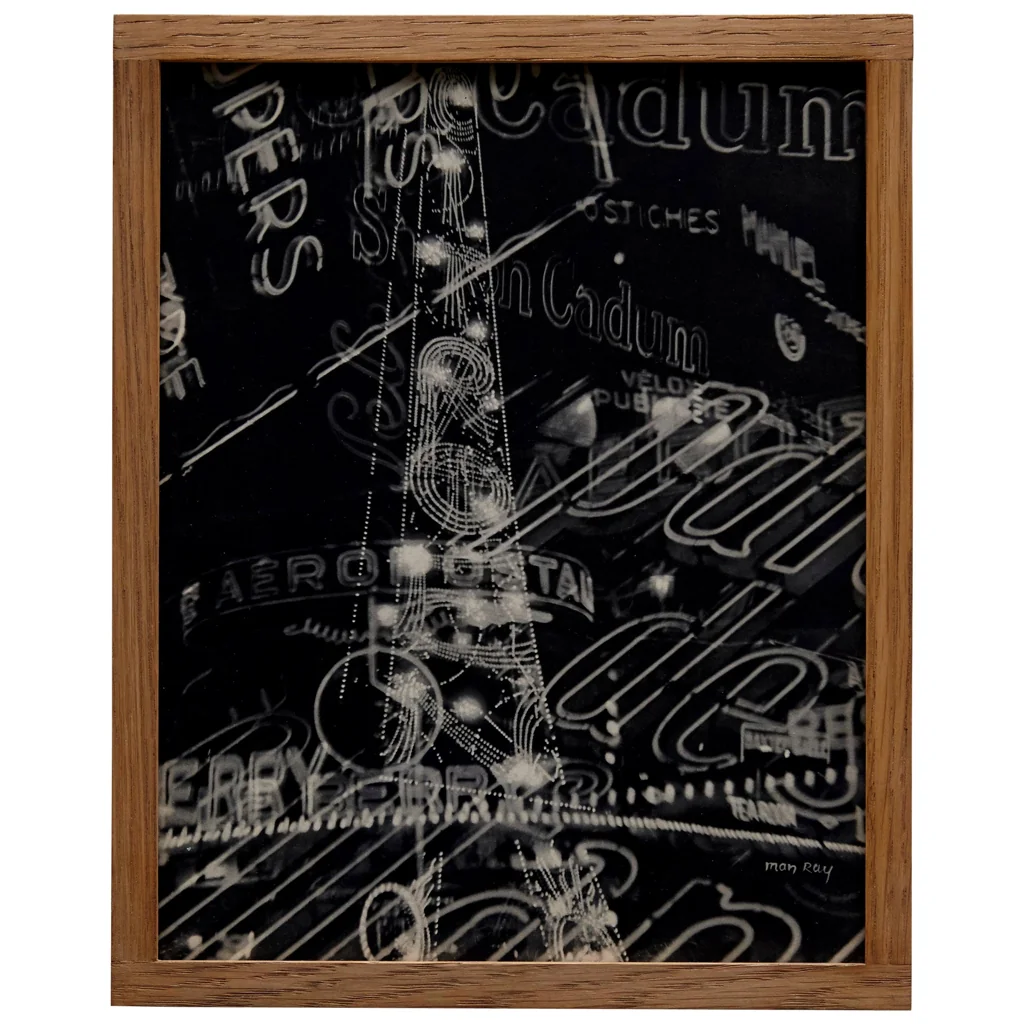
Man Ray, Rayographs, 1920s
Focus on the hard contrast, floating white forms, and sense that objects have become spectral impressions left by light on a dark field.
Shared high contrast monochrome, luminous silhouettes, dark photographic field, experimental photographic surface
Different camera-less process, still-life objects, more Surrealist ambiguity, less measured motion
Image search
Man Ray Rayograph 1920s white objects on black photogram