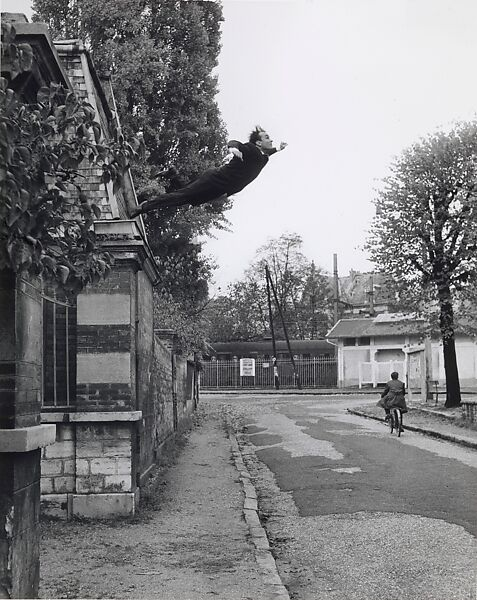
Leap into the Void
A grainy black-and-white street photograph is organized around a startling diagonal: a suited figure appears to launch horizontally from a masonry wall into an open, pale sky. The composition balances documentary ordinariness—stone façade, curb, trees, empty road, distant cyclist—with an impossible bodily gesture. Its visual power comes from the clash between everyday urban realism and surreal suspension, using flat grayscale, deep street recession, and photomontage-like theatricality to make risk look calm and almost ceremonial.
Visual index
Form horizontal airborne bodyrectilinear wall and curbreceding roadwayorganic tree massesphotographic illusionism
Mood surreal calmperformative dangerdeadpan humorurban quietmetaphysical suspense
Color black and whitesoft grayscalehigh pale skydark suit silhouettemuted urban stone tones
Texture film graindocumentary street surfacestone and brick masonryleafy tonal specklingslightly soft photographic contrast
Composition strong diagonal figureleft-weighted architectural edgedeep street perspectivelarge negative sky areasmall distant cyclist as scale cue
Related images
MoMAformal echo
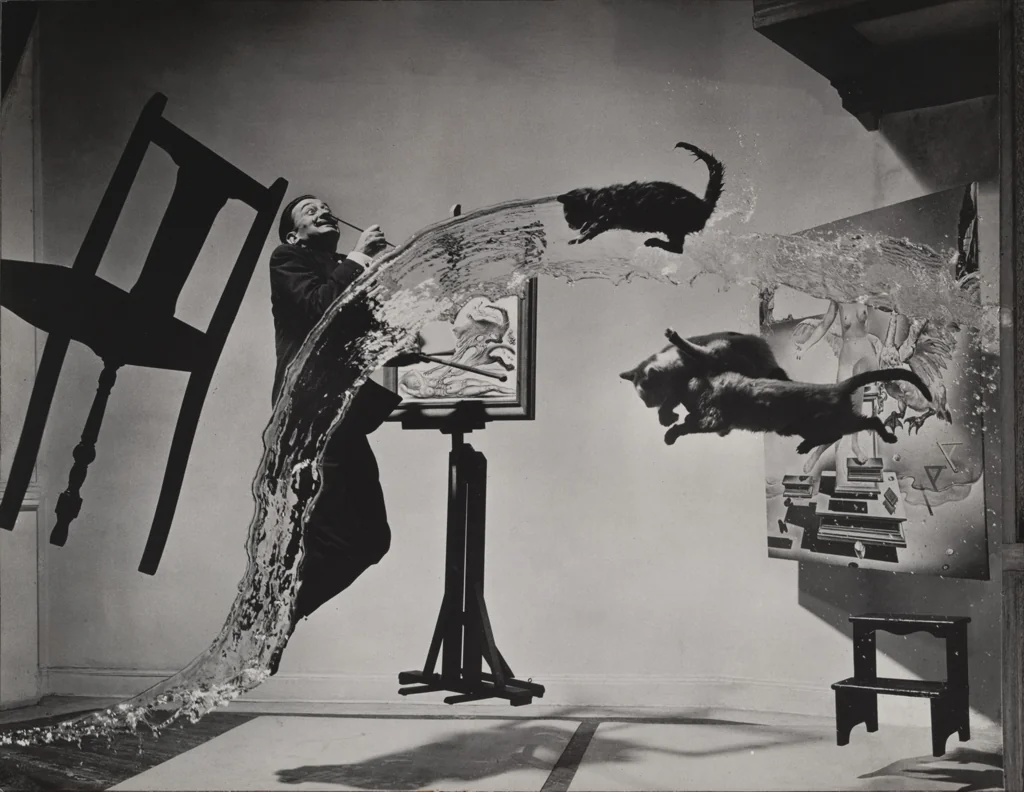
Surrealist staged photography
Philippe Halsman, Dalí Atomicus, 1948
Look at how the airborne body and surrounding props are frozen at the peak of motion, turning a split second into a theatrical tableau rather than a casual snapshot.
Shared black-and-white illusionism, suspended human figure, staged photographic impossibility, deadpan theatrical timing
Different busy studio environment, comic prop explosion, more overtly baroque staging
Image search
Philippe Halsman Dalí Atomicus 1948 photograph
moma.orgmedium reference
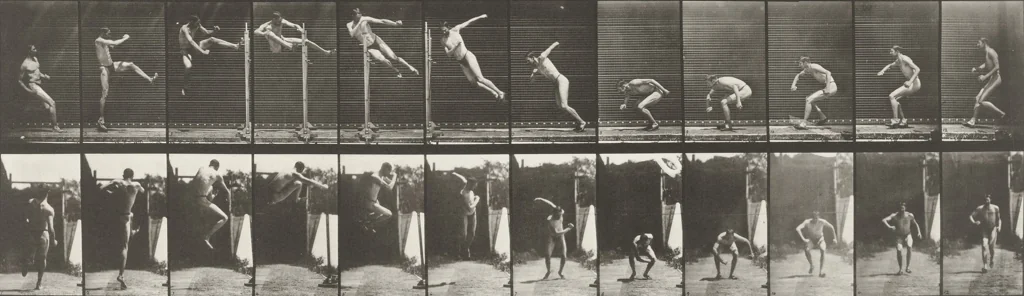
Early motion study photography
Eadweard Muybridge, Animal Locomotion plates, 1887
Attend to the crisp side-on presentation of the body and the way photography is used to analyze a fleeting physical act as visual evidence.
Shared side-view body in motion, photographic proof effect, isolated gesture, interest in gravity
Different serial grid format, scientific neutrality, plain studio backdrop
Image search
Eadweard Muybridge Animal Locomotion man jumping plate
moma.orgcompositional relationship
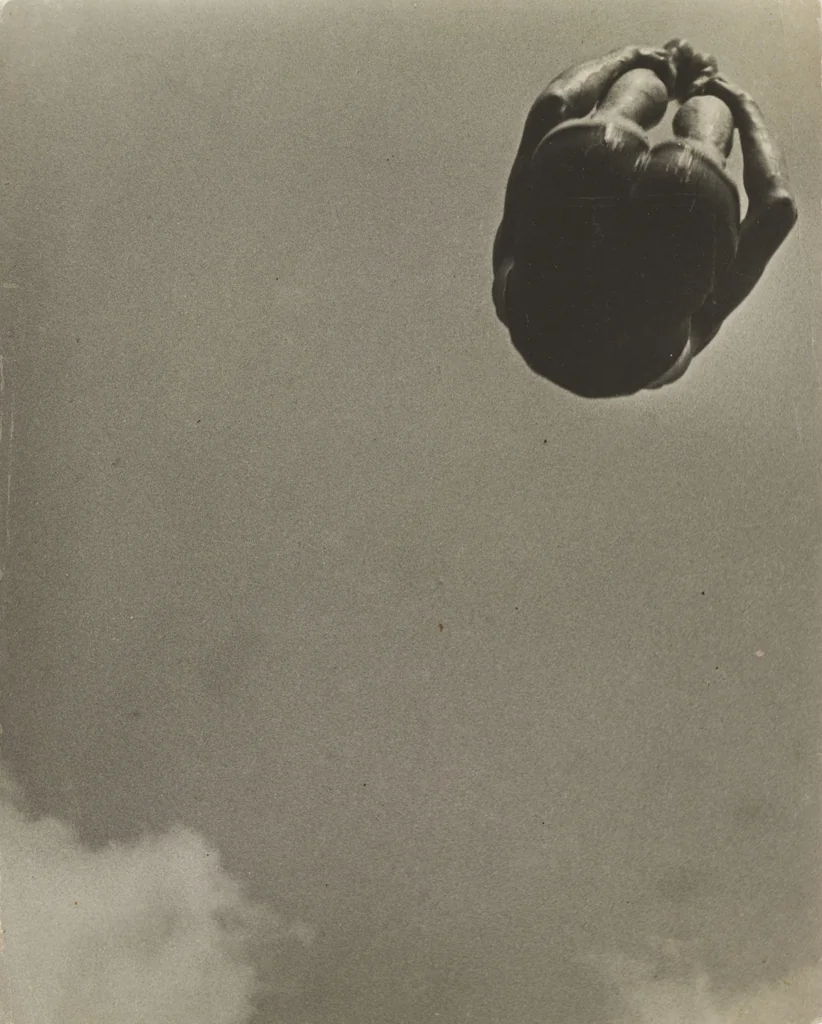
New Vision dynamic photography
Alexander Rodchenko, Diving, 1934
Notice how athletic motion becomes a geometric event: limbs and torso read as directional vectors against simplified surrounding space.
Shared dynamic airborne body, modernist diagonal energy, reduced tonal palette, graphic treatment of motion
Different athletic context, more abstract viewpoint, less narrative street setting
Image search
Alexander Rodchenko Diving 1934 photograph
Vintage Everydaycultural lineage
Silent film stunt modernism
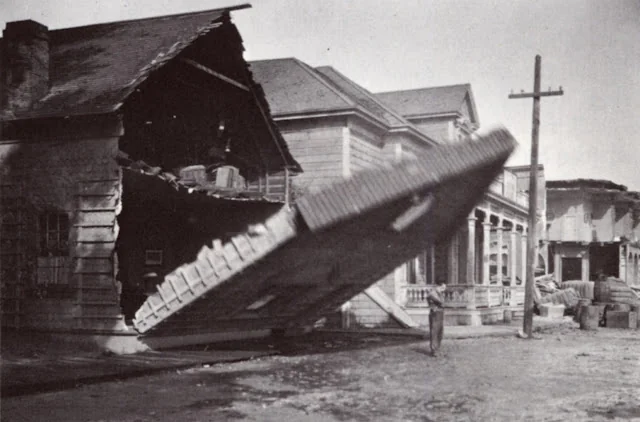
Buster Keaton, Steamboat Bill, Jr. falling house façade sequence, 1928
Watch how danger is framed frontally and matter-of-factly, so the absurdity comes from the calm presentation rather than expressive exaggeration.
Shared deadpan risk, architectural framing, body versus gravity, comic impossibility
Different moving-image sequence, slapstick timing, visible stunt mechanics
Image search
Buster Keaton Steamboat Bill Jr falling house facade scene
news.artnet.comcultural lineage
Conceptual performance documentation
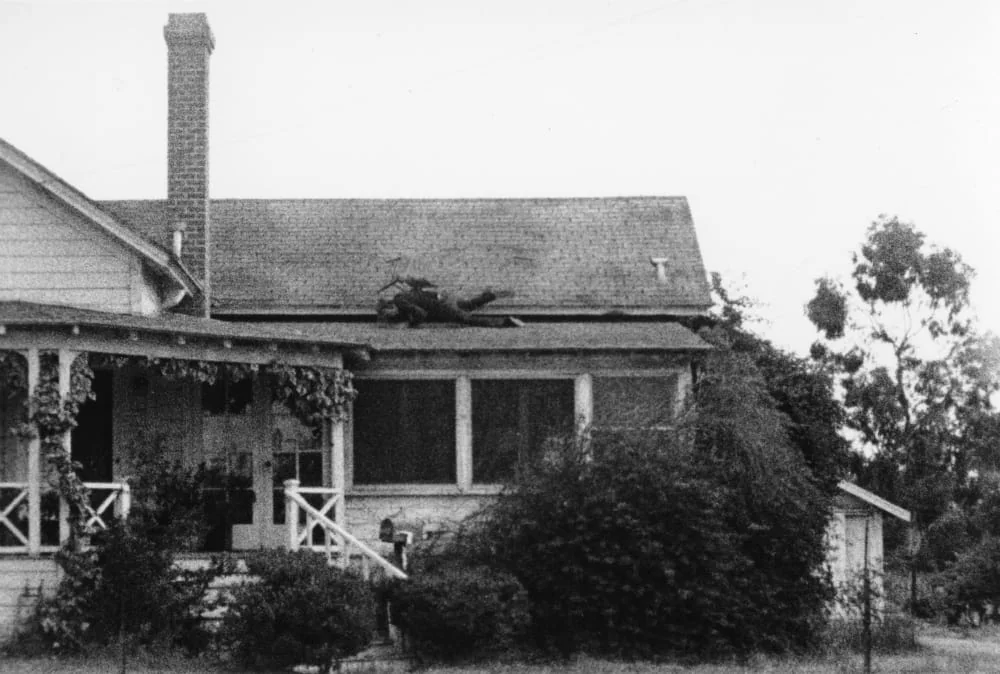
Bas Jan Ader, Fall I, Los Angeles, 1970
Focus on the plainness of the setting and the minimal action: the drama comes from committing the body to a fall with almost no theatrical decoration.
Shared falling as artwork, minimal urban setting, documented performance, vulnerability to gravity
Different video/film duration, more intentionally anti-heroic tone, suburban domestic location
Image search
Bas Jan Ader Fall I Los Angeles 1970 still
MoMAperiod relationship
Nouveau Réalisme performance context
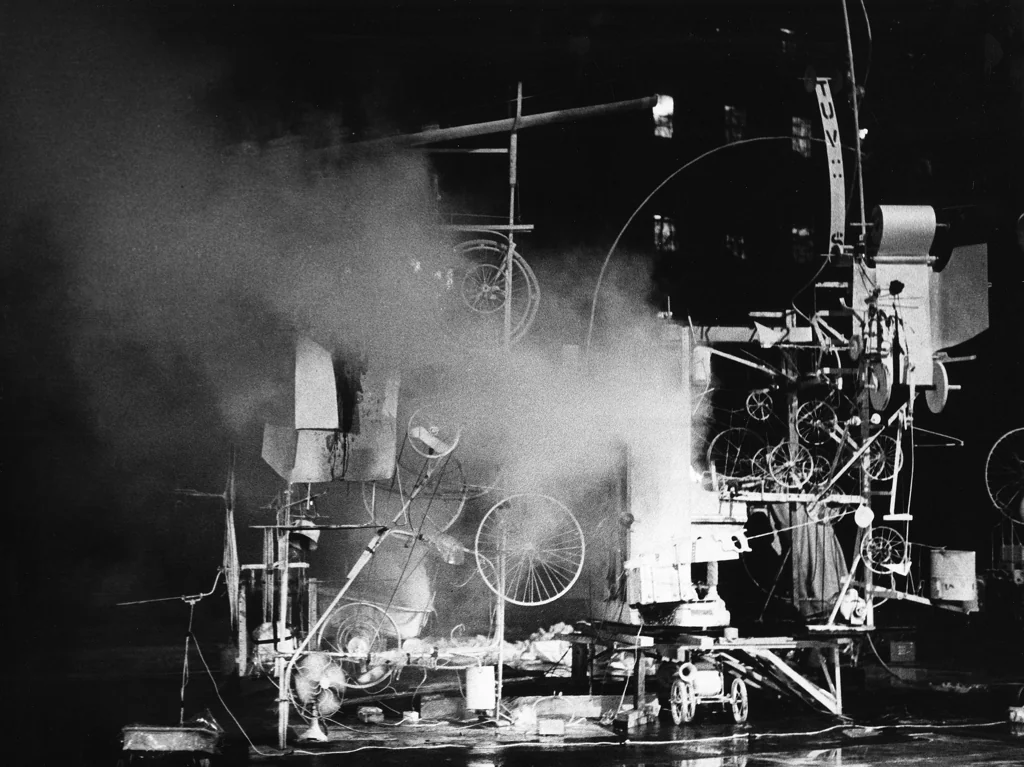
Jean Tinguely, Homage to New York, 1960
Consider the importance of a one-time action staged for witnesses and cameras, where the surviving image becomes the primary way the event circulates.
Shared 1960 performance culture, event-based artwork, photographic afterlife, postwar avant-garde spectacle
Different machine-centered action, public museum garden setting, kinetic destruction rather than bodily leap
Image search
Jean Tinguely Homage to New York 1960 Museum of Modern Art performance