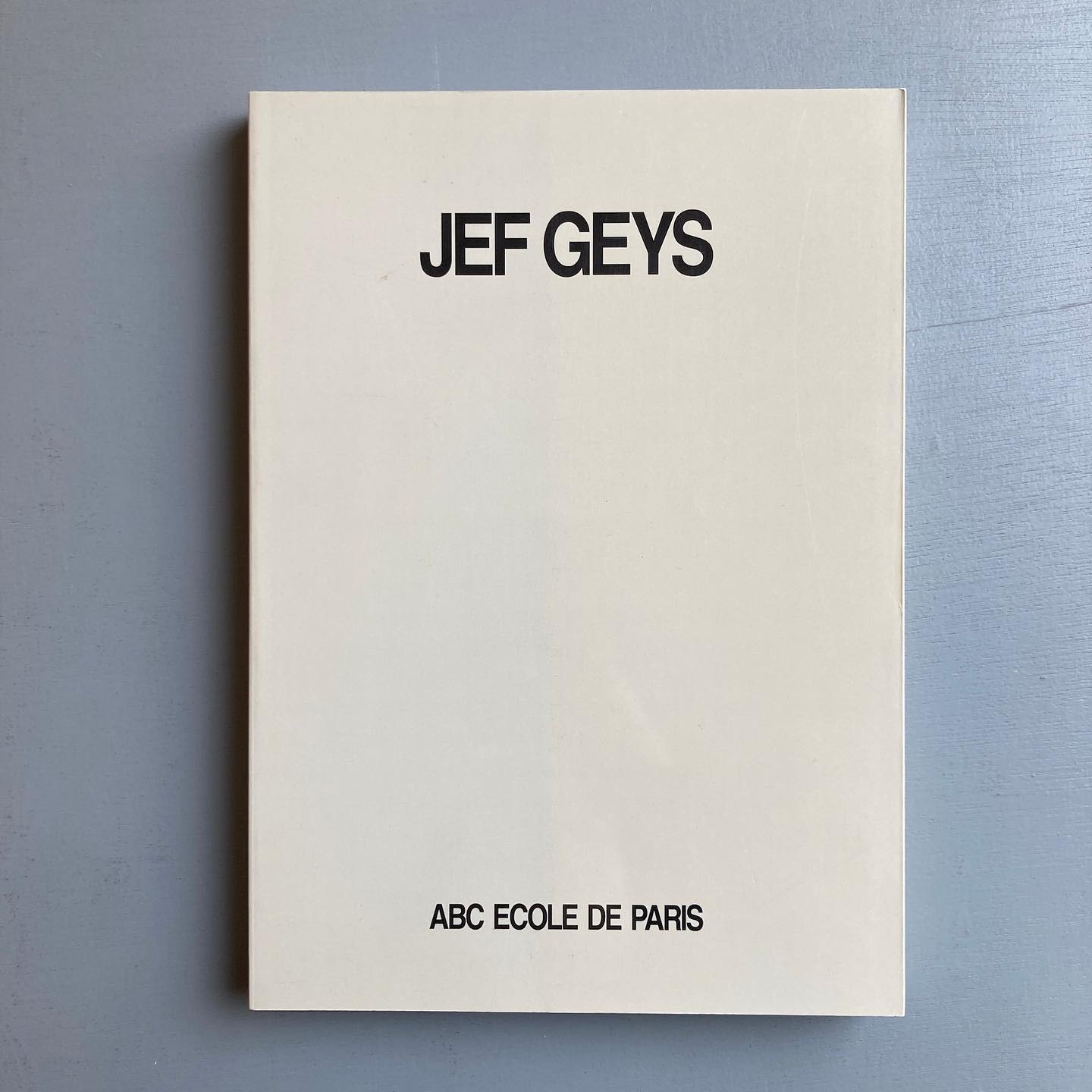
Jef Geys: ABC Ecole de Paris
A nearly blank, cream-white book cover is photographed straight on against a cool gray tabletop. The design depends on restraint: bold black sans-serif capitals sit near the top, a smaller institutional line anchors the bottom, and the wide empty field between them becomes the main visual event. Subtle paper aging, faint scuffs, and a soft cast shadow give the otherwise severe layout a tactile, archival presence. The mood is quiet, conceptual, and institutional, closer to an exhibition catalogue or artist book than to commercial publishing.
Visual index
Form rectangular cover fieldbold uppercase sans-serif titleminimal two-zone layoutflat graphic hierarchyartist-book/catalogue format
Mood restrainedarchivalconceptualinstitutionalquietly austere
Color cream white paperblack typographycool gray backgroundslight yellowing from agelow-contrast neutral palette
Texture matte paper surfaceminor scuffs and handling markssoft shadow along the left edgesubtle tabletop grainslightly worn cover edges
Composition centered book objectlarge negative spacetop-weighted title placementsmall bottom imprintfrontal documentary framing
Related images
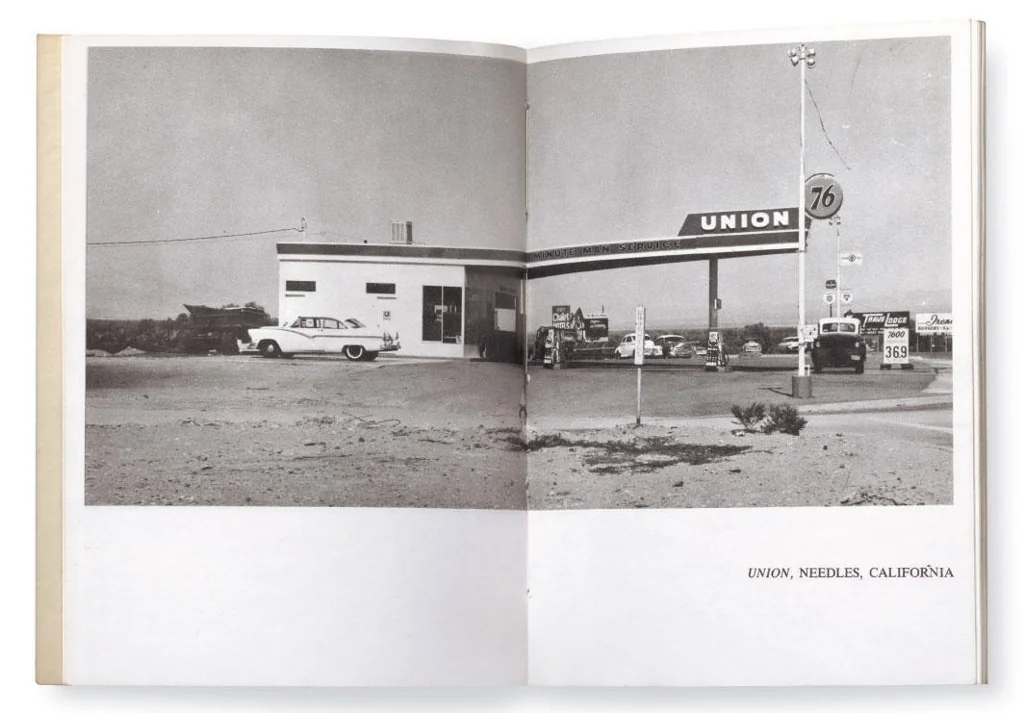
mutualart.commedium reference
Conceptual artist book minimalism
Ed Ruscha, Twenty-six Gasoline Stations, 1963
Look at how the cover treats the book as an information container: sparse title, little ornament, and an intentionally ordinary surface that makes the publishing format itself feel like the artwork.
Shared plain cover field, artist-book scale, deadpan titling, large negative space, anti-illustrational approach
Different red title treatment, American roadside subject lineage, more self-published vernacular tone
Image search
Ed Ruscha Twenty-six Gasoline Stations first edition cover 1963
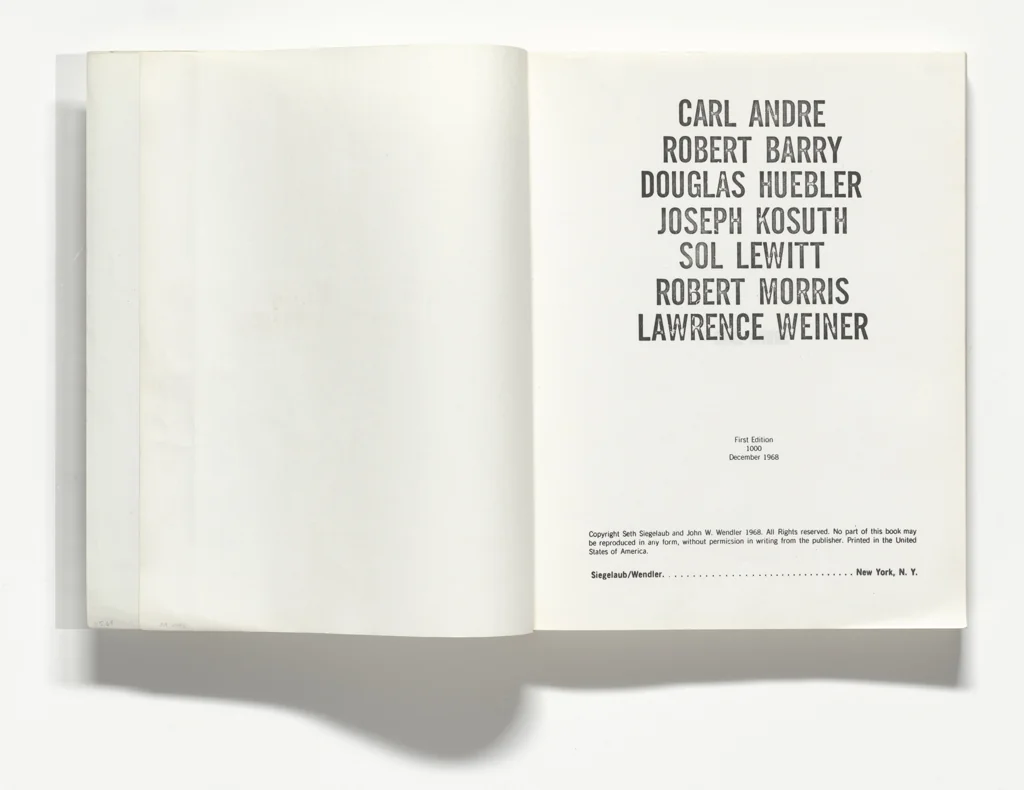
moma.orgcultural lineage
Late 1960s conceptual exhibition publishing
Seth Siegelaub, Xerox Book, 1968
Attend to the way typography replaces imagery and how the cover's authority comes from matter-of-fact naming rather than expressive graphic composition.
Shared black type on white ground, unadorned publication surface, conceptual-art context, documentary austerity
Different multi-artist project, more explicitly serial and bureaucratic premise, less pronounced book-object photography
Image search
Seth Siegelaub Xerox Book 1968 cover Carl Andre Barry Huebler Kosuth LeWitt Morris Weiner
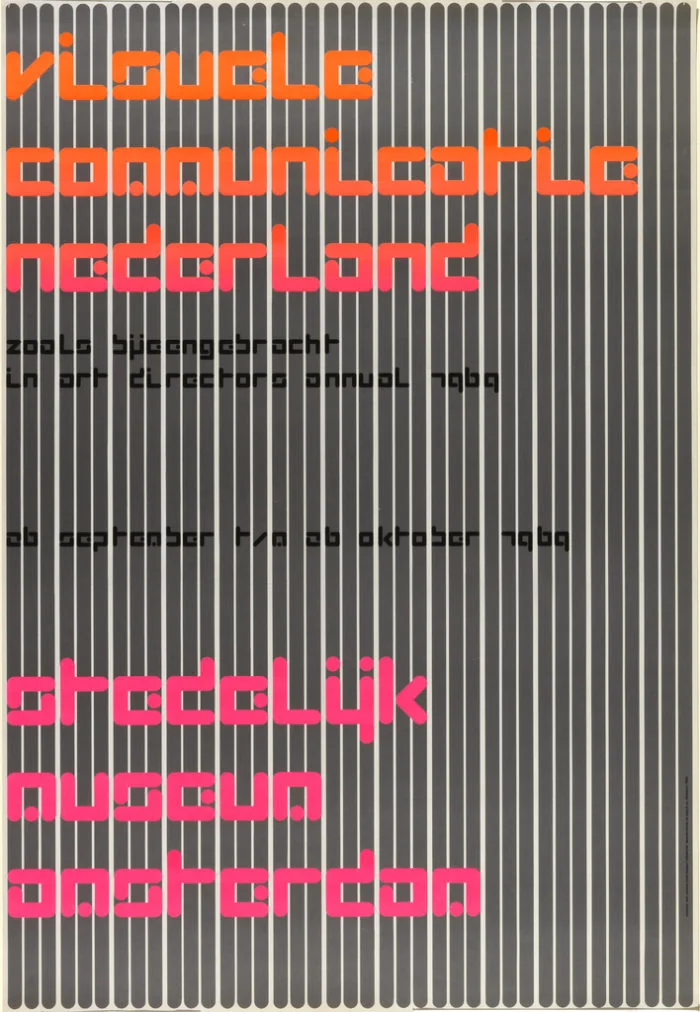
cooperhewitt.orgtypographic relationship
Swiss influenced museum catalogue typography
Wim Crouwel, Stedelijk Museum catalogue designs, 1950s–1970s
Notice the typographic discipline: clear hierarchy, geometric letterforms, generous margins, and the refusal of decorative illustration.
Shared bold sans-serif capitals, institutional clarity, controlled spacing, minimal graphic palette, museum-catalogue restraint
Different Crouwel often uses stronger grid systems, more experimental modular lettering, frequent color accents
Image search
Wim Crouwel Stedelijk Museum catalogue cover black typography white background
barnebys.deperiod relationship
New Typography modernism
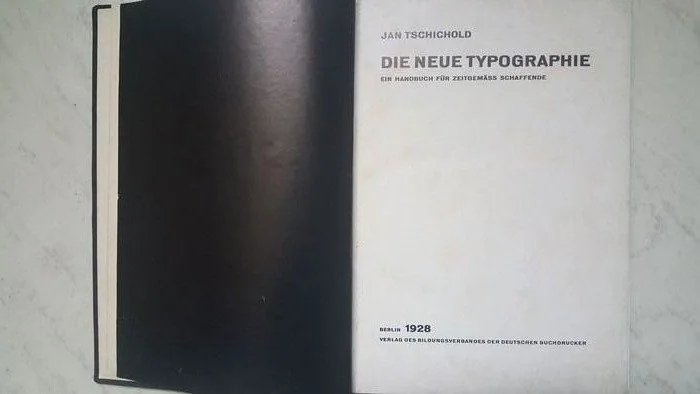
Jan Tschichold, Die neue Typographie, 1928
Compare how blank paper becomes active space and how sans-serif type is used as a structural element, not merely as a caption.
Shared typography-led design, modernist economy, unillustrated cover, emphasis on hierarchy
Different more dynamic asymmetry, red-and-black constructivist accenting, interwar avant-garde energy
Image search
Die neue Typographie Jan Tschichold 1928 book cover
saint-martin-bookshop.comcompositional relationship
Postwar exhibition catalogue austerity
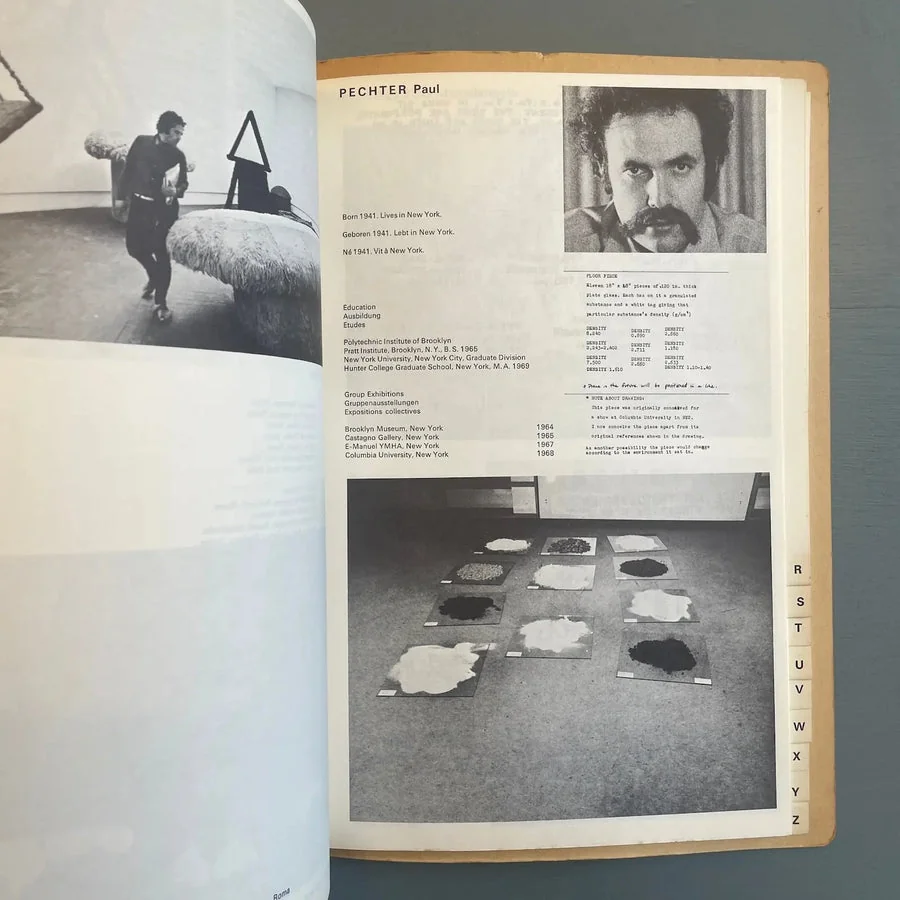
Harald Szeemann, When Attitudes Become Form exhibition catalogue, Kunsthalle Bern, 1969
Focus on the cover as a curatorial document: the page is not trying to illustrate the contents but to establish a sober frame of record, title, and institutional context.
Shared white cover field, black institutional text, exhibition-catalogue sensibility, minimal hierarchy, archival mood
Different denser title information, more historically exhibition-specific identity, less empty central field
Image search
Harald Szeemann When Attitudes Become Form 1969 Kunsthalle Bern catalogue cover
jonathanahill.comformal echo
Language based conceptual art publishing
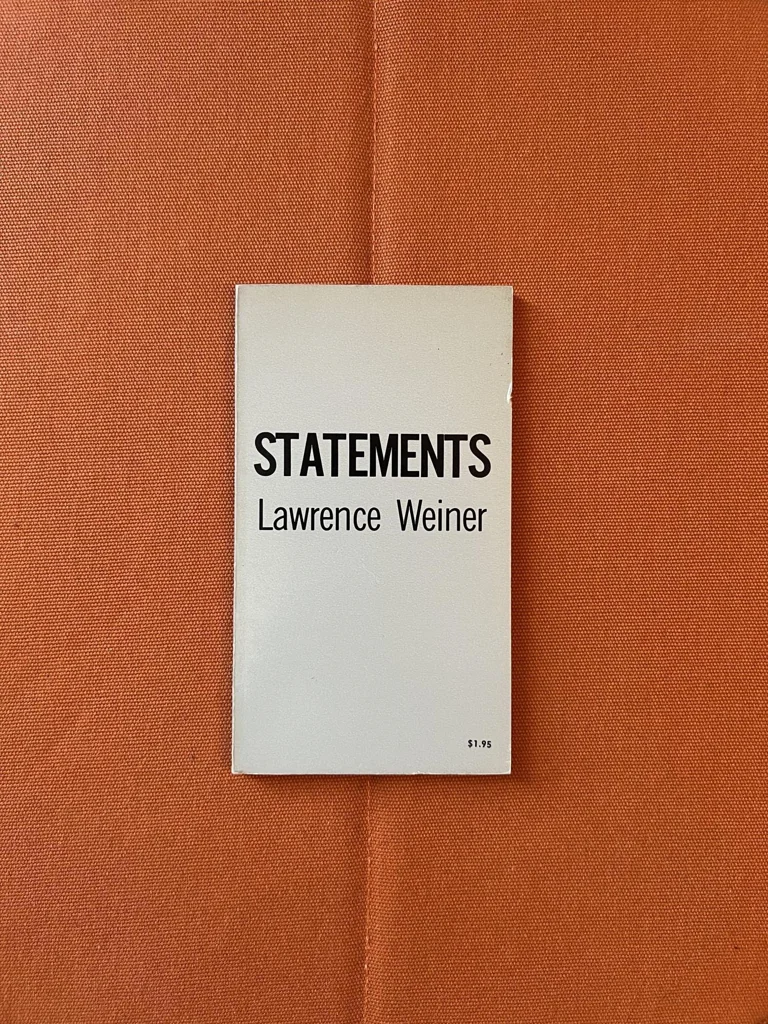
Lawrence Weiner, Statements, 1968
Look at the bluntness of the words on the page: the text is not decorated or illustrated, but given enough space to operate as the main visual form.
Shared language as primary image, uppercase typographic presence, plain book format, conceptual restraint
Different more text-driven proposition structure, less institutional publisher line, stronger emphasis on linguistic content
Image search
Lawrence Weiner Statements 1968 artist book cover