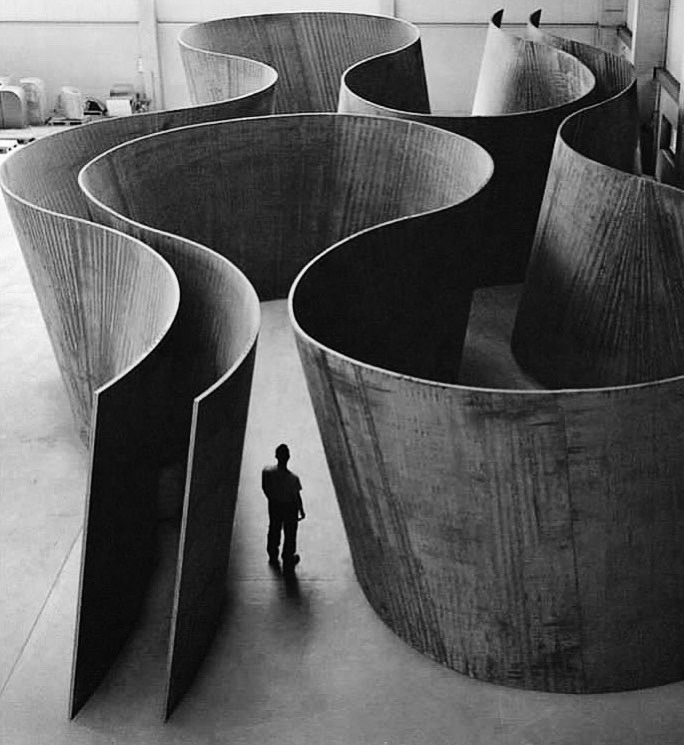
Torqued Ellipses
A black-and-white view of huge, walk-in curved metal walls creates a feeling of industrial mass made fluid. The composition is dominated by sweeping elliptical arcs, dark interior voids, and thin bright rims that trace the sculpture’s edges. Weathered vertical streaks on the metal soften the severity of the forms, while the small human figure establishes an almost architectural scale and a mood of quiet intimidation.
Visual index
Form torqued ellipsescurving vertical platesopen cylindrical enclosureslabyrinthine passagesminimal geometric mass
Mood austeremonumentalquietly oppressivemeditativeindustrial
Color black-and-white tonal rangecharcoal gray steelbright edge highlightsdeep shadow interiorsmuted industrial neutrals
Texture weathered rolled steelvertical oxidation streaksmatte industrial surfacescraped and patinated metalsmooth but heavy planes
Composition overhead-oblique viewpointrepeating nested curvesmaze-like spatial layoutstrong scale contrastcropped monumental forms
Related images
Mediumcultural lineage
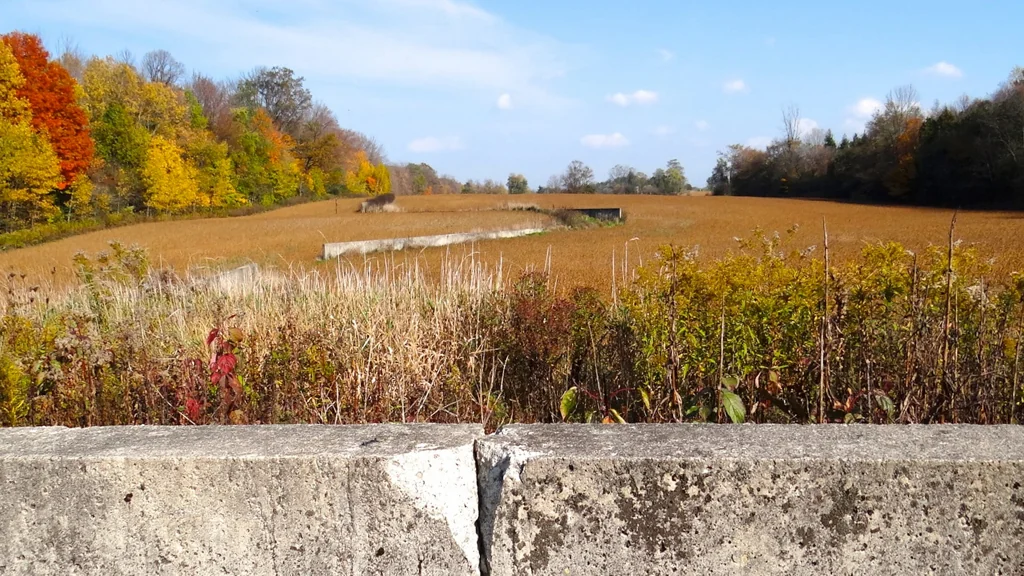
Post minimalist steel sculpture
Richard Serra, Shift, 1970–72
Look at how the work is not primarily an object to view from one fixed point, but a spatial sequence that changes as the body moves through or around it.
Shared bodily scale, minimal industrial language, processional viewing, emphasis on mass and movement
Different outdoor landscape setting, low concrete walls, less enclosing curvature
Image search
Richard Serra Shift concrete walls
metmuseum.orgformal echo
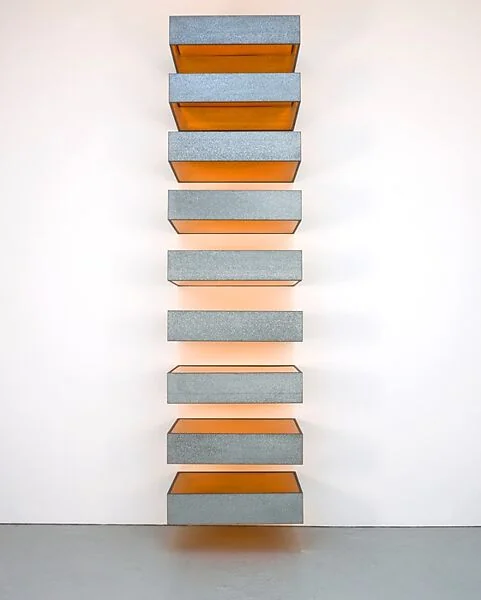
Minimalist serial structure
Donald Judd, Untitled stack works, 1960s–1980s
Attend to the clean edges, repeated intervals, and refusal of decorative detail; the impact comes from proportion, material, and spatial rhythm.
Shared industrial fabrication, minimal geometry, precise edges, viewer-scale objecthood
Different rectilinear modules, wall-mounted vertical stack, brighter polished materials, less immersive space
Image search
Donald Judd Untitled stack galvanized iron
worleygig.commaterial kinship
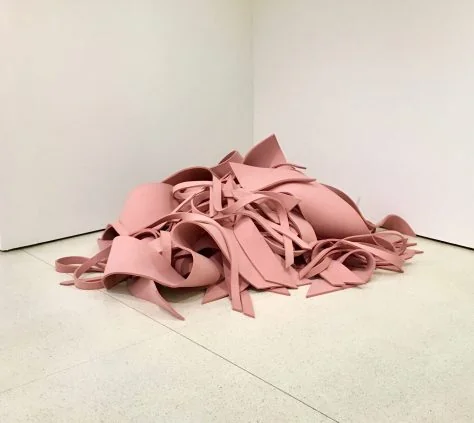
Process art and anti form
Robert Morris, felt works, late 1960s
Notice how the final shape appears to emerge from the material’s own tendencies—folding, sagging, bending, or resisting control.
Shared material-led form, large abstract planes, post-minimal sensibility, emphasis on gravity
Different soft fabric material, collapsing silhouettes, less architectural enclosure, more casual edges
Image search
Robert Morris felt anti form
compositional relationship
Industrial labyrinth installation
Bruce Nauman, Green Light Corridor, 1970
Focus on the way the artwork controls the viewer’s path and produces bodily unease through restricted, elongated space.
Shared walk-through structure, psychological compression, viewer participation, architectural scale
Different fluorescent color, rectilinear corridor, lighter construction, more explicitly claustrophobic layout
Image search
Bruce Nauman Green Light Corridor
Wikimedia Commonscultural lineage
Land art monumentality
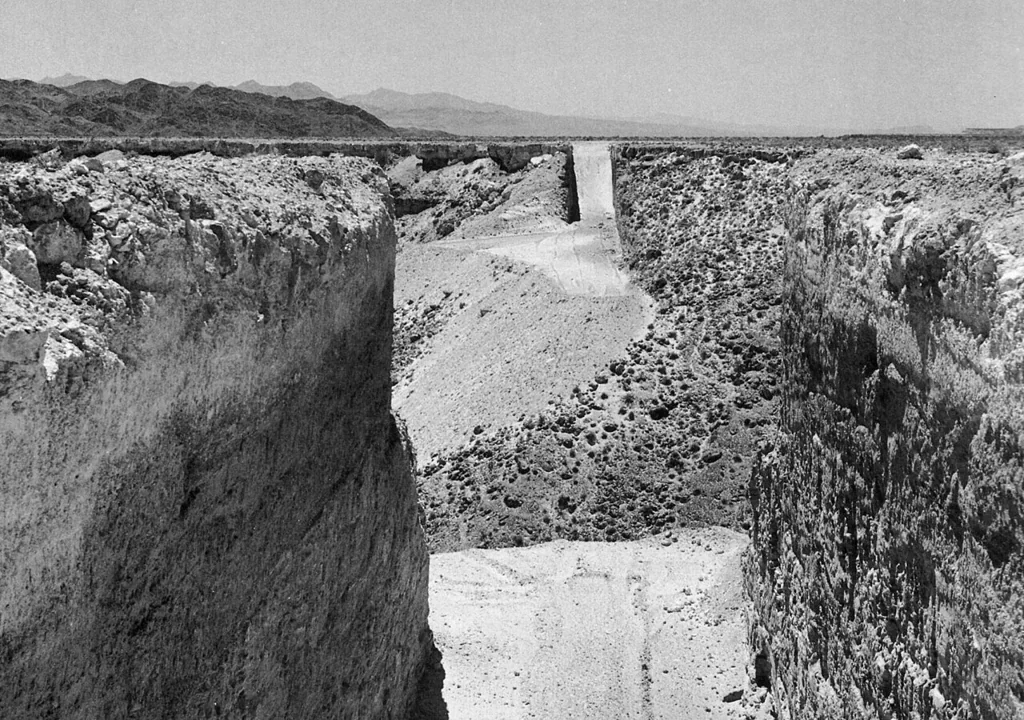
Michael Heizer, Double Negative, 1969–70
Look for how negative space becomes the main sculptural event: the void, path, and cut are as important as the material edges.
Shared monumental scale, void as form, bodily confrontation, austere minimal language
Different desert landscape, earth excavation, straight cuts, horizontal orientation
Image search
Michael Heizer Double Negative Nevada
azahner.commaterial kinship
Weathering steel architecture
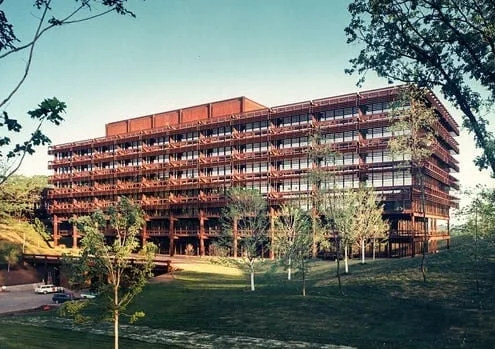
Eero Saarinen, John Deere World Headquarters, 1964
Study the dark oxidized skin and the way weathering steel gives a modern structure both toughness and earthy surface depth.
Shared weathering steel surface, industrial patina, monumental modernism, dark tonal mass
Different rectilinear corporate architecture, glass-and-steel facade, functional building program, less sculptural curvature
Image search
Saarinen John Deere weathering steel