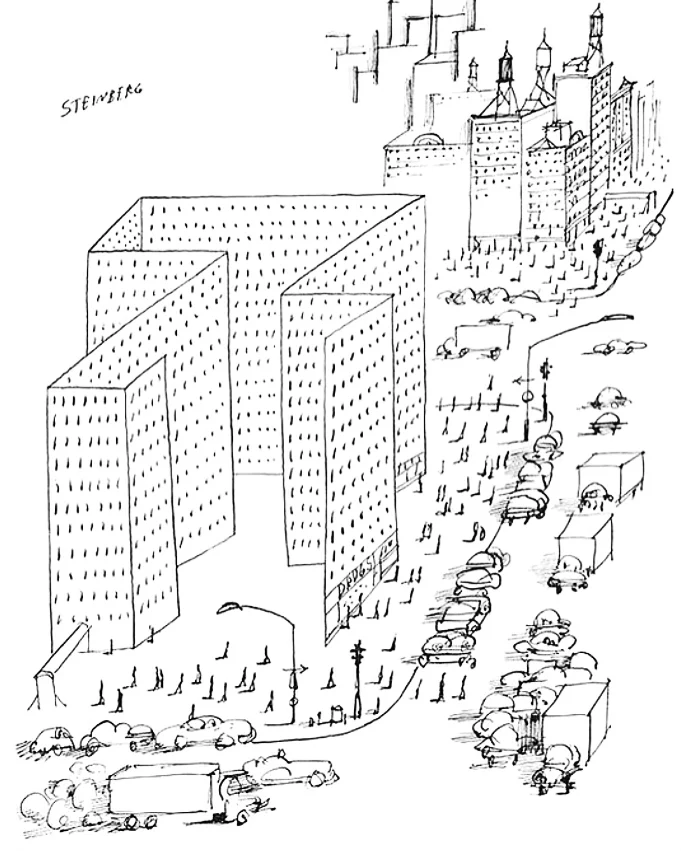
Loose Ink Modern City Canyon
A spare black-ink drawing builds an urban scene from quick, nervous linework and large areas of untouched white paper. The composition uses an oblique bird’s-eye perspective: blank-faced slab buildings dominate the left foreground while a busier, older skyline recedes at upper right, stitched together by tiny cars, pedestrians, poles, and dash-like windows. The mood is observational and wry rather than dramatic, with modernist massing rendered as a light cartoon diagram of city life.
Visual index
Form rectilinear slab towerscartoon-scale vehiclestiny stick-like pedestrianscompressed skyline silhouettesdiagrammatic streetscape
Mood wryurbananalyticplayfulslightly frenetic
Color black ink on white groundmonochrome contrastabsence of tonal fillpaper-white negative space
Texture scratchy pen linedotted window marksrapid gestural hatchingopen paper surface
Composition oblique aerial perspectivelarge foreground architectural blocksreceding diagonal street griddense miniature street activityasymmetrical urban layout
Related images
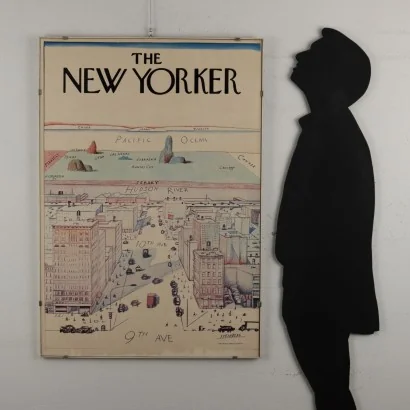
archivio.dimanoinmano.itcultural lineage
Saul Steinberg s New Yorker urban diagrams
Saul Steinberg, “View of the World from 9th Avenue,” The New Yorker cover, 1976
Look at how geography is made psychological: scale is distorted, streets become diagrams, and small marks stand in for crowds, traffic, and civic rhythm.
Shared wry urban viewpoint, compressed perspective, cartoon cartography, economical black line, miniature civic details
Different more map-like horizon in the reference, stronger color fields in the reference, less architectural massing in the reference
Image search
Saul Steinberg View 9th Avenue cover
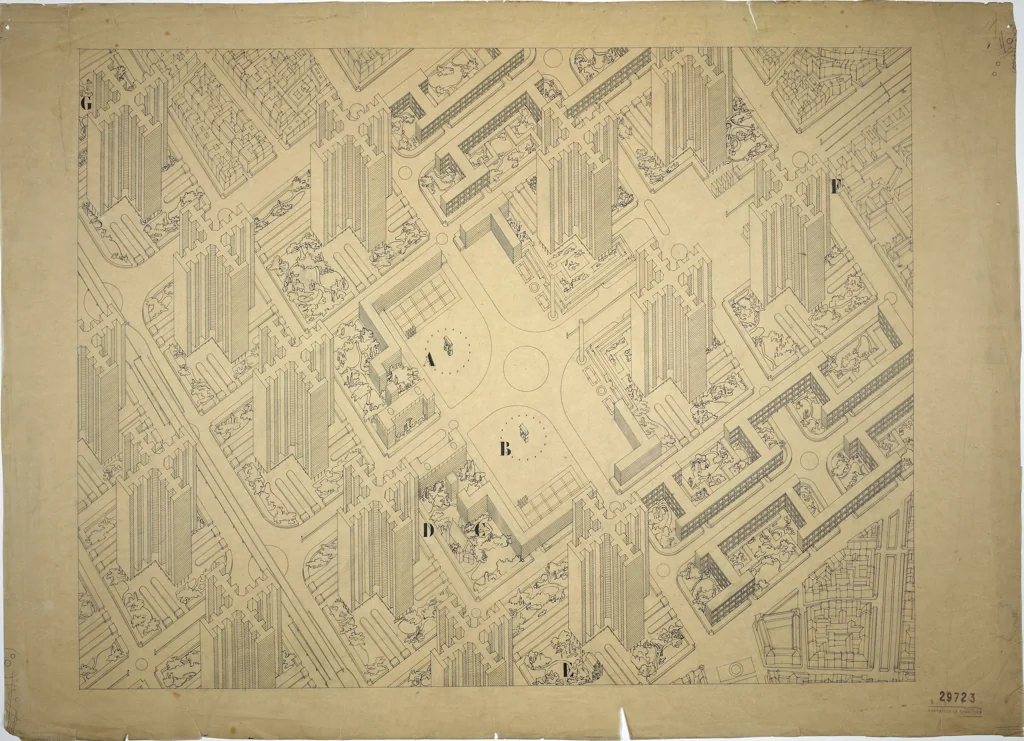
MoMAformal echo
Modernist urban planning drawings
Le Corbusier, Plan Voisin for Paris, 1925
Attend to the slab-like towers, repetitive window grids, and the way buildings sit as abstract volumes within a simplified circulation field.
Shared rectilinear tower blocks, repetitive facade marks, planned-city geometry, open ground plane
Different more utopian planning logic in the reference, more rigid symmetry in the reference, less street-level humor in the reference
Image search
Le Corbusier Plan Voisin Paris drawing
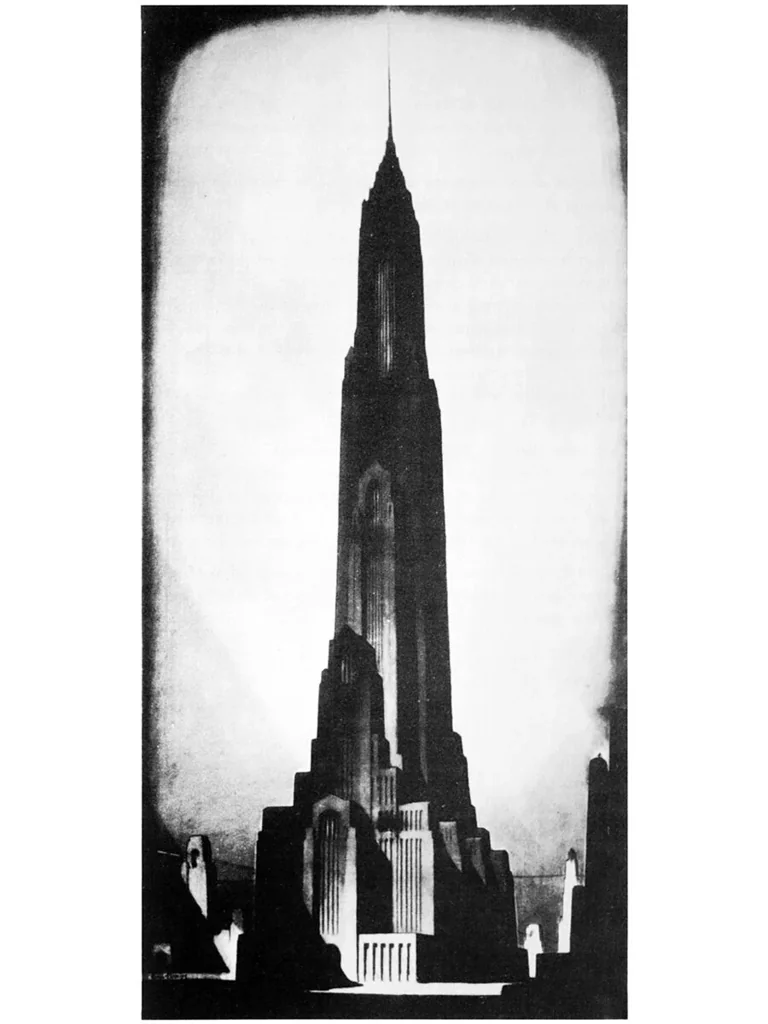
onverticality.comcontrast reference
American skyscraper fantasy rendering
Hugh Ferriss, The Metropolis of Tomorrow, 1929
Compare the treatment of mass: Ferriss uses heavy darkness and theatrical setbacks, while the uploaded image uses thin outlines and dotted facades to keep the buildings weightless.
Shared towering urban forms, vertical city imagination, architectural compression, metropolitan scale
Different dramatic chiaroscuro in the reference, monumental mood in the reference, charcoal atmosphere instead of pen spareness
Image search
Hugh Ferriss Metropolis Tomorrow skyscrapers
MoMAperiod relationship
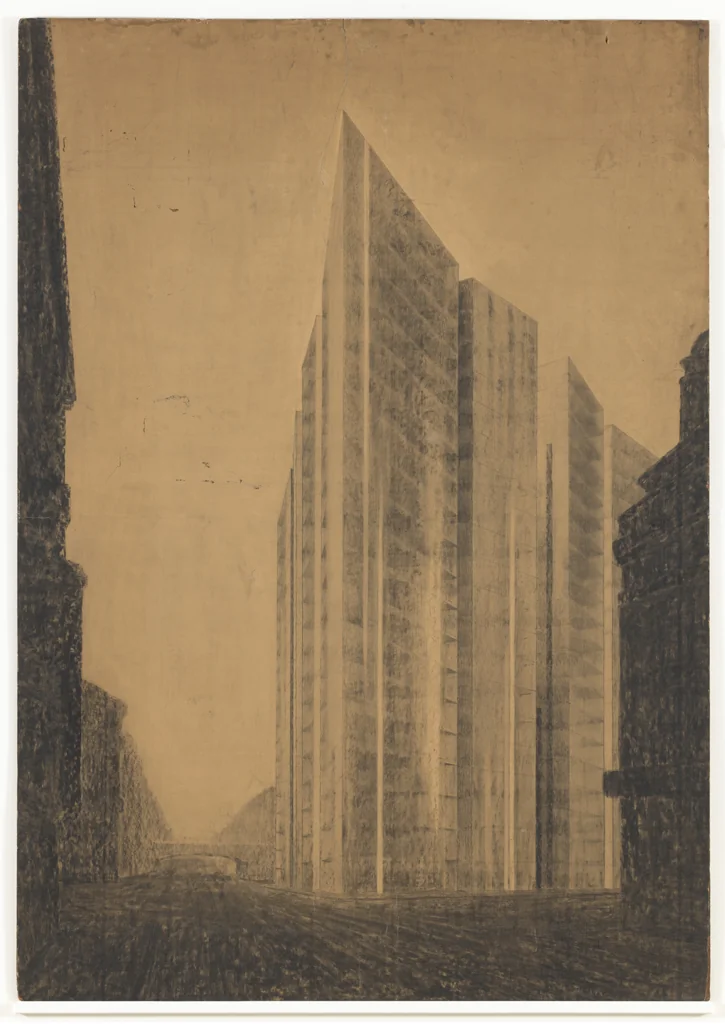
Miesian glass tower drawing
Ludwig Mies van der Rohe, Friedrichstrasse Skyscraper Project, 1921
Notice the emphasis on contour, vertical repetition, and the building as a crystalline or slab-like object rather than a decorated facade.
Shared clean vertical silhouettes, minimal architectural detail, modernist high-rise language, linear facade rhythm
Different more crystalline form in the reference, more architectural precision in the reference, less populated urban scene in the reference
Image search
Mies Friedrichstrasse Skyscraper Project drawing
Inkspillmedium reference
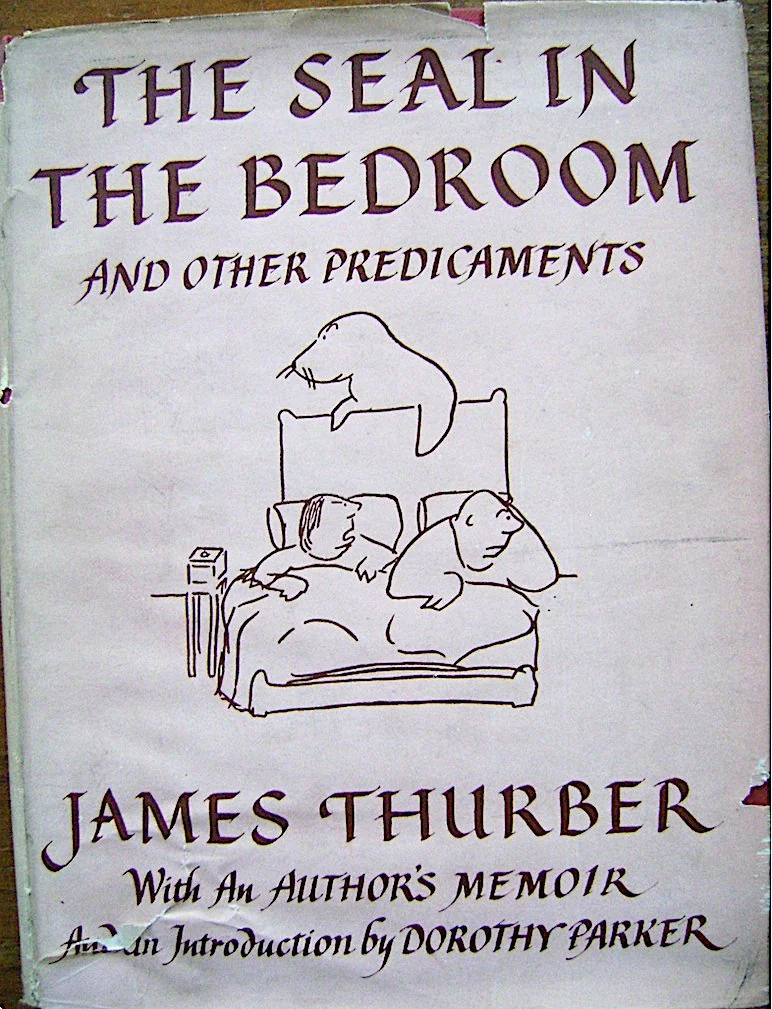
New Yorker single line cartoon tradition
James Thurber, “The Seal in the Bedroom,” 1932
Watch how a shaky contour can carry character, setting, and timing without shading or elaborate anatomy; the humor lives in the line’s understatement.
Shared spare ink line, white-paper openness, comic economy, informal hand-drawn rhythm
Different domestic interior in the reference, figure-centered joke in the reference, less architectural structure in the reference
Image search
James Thurber Seal Bedroom drawing
Wikimedia Commonscompositional relationship
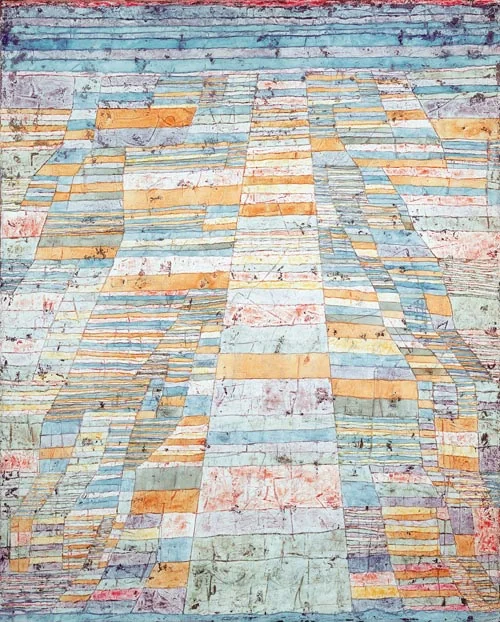
Abstracted city path composition
Paul Klee, “Highways and Byways,” 1929
Look for the way circulation becomes pattern: roads, routes, and small repeated elements create a visual rhythm more than a literal map.
Shared diagrammatic urban movement, repeated small marks, network-like composition, abstracted spatial rhythm
Different painted color structure in the reference, more abstract geometry in the reference, less narrative street detail in the reference
Image search
Paul Klee Highways Byways painting