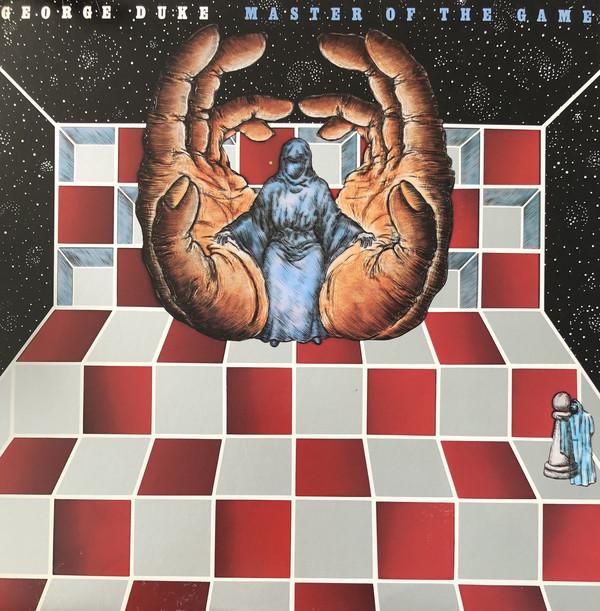
Master of the Game
A vividly airbrushed, late-1970s album-cover composition built around theatrical perspective, cosmic fantasy, and symbolic game imagery. The design combines a red-and-white checkerboard room with a star-speckled black void, oversized sculptural hands, and a robed central figure, creating a surreal stage-like space. Its mood is mystical, playful, and slightly ominous, with glossy painted highlights, hard-edged geometric recession, and funk-era speculative grandeur.
Visual index
Form checkerboard geometryoverscaled anatomical formsarched hand silhouettereceding cubic roomsymbolic chess motif
Mood surrealcosmicmysticalstrategicfunk-fantasy theatrical
Color deep black star fieldred and off-white checkerboardwarm brown skin tonescool blue robepale gray architectural shading
Texture airbrushed gradientspainted skin creasesspeckled cosmic backgroundslightly worn printed-album surfacehard-edged graphic tiles
Composition central symmetrical framingforced one-point perspectivefloating monumental handsstage-like interior opening into spacesmall chess-piece accent at lower right
Related images
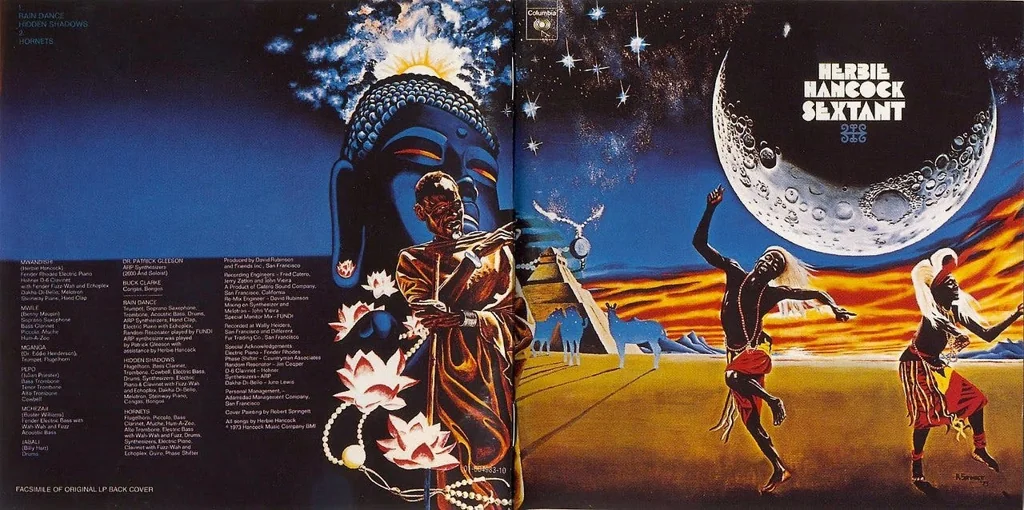
New Directions In Music - Substackcultural lineage
Jazz fusion Afrofuturist album art
Robert Springett, cover for Herbie Hancock’s Sextant
Look at how the album cover turns music into an imagined environment: space-age depth, emblematic figures, and a sense of occult or technological ceremony.
Shared cosmic jazz-fusion context, fantasy environment, symbolic central imagery, 1970s speculative mood
Different more mechanical imagery, denser futuristic detail, less checkerboard geometry
Image search
Robert Springett Sextant cosmic cover
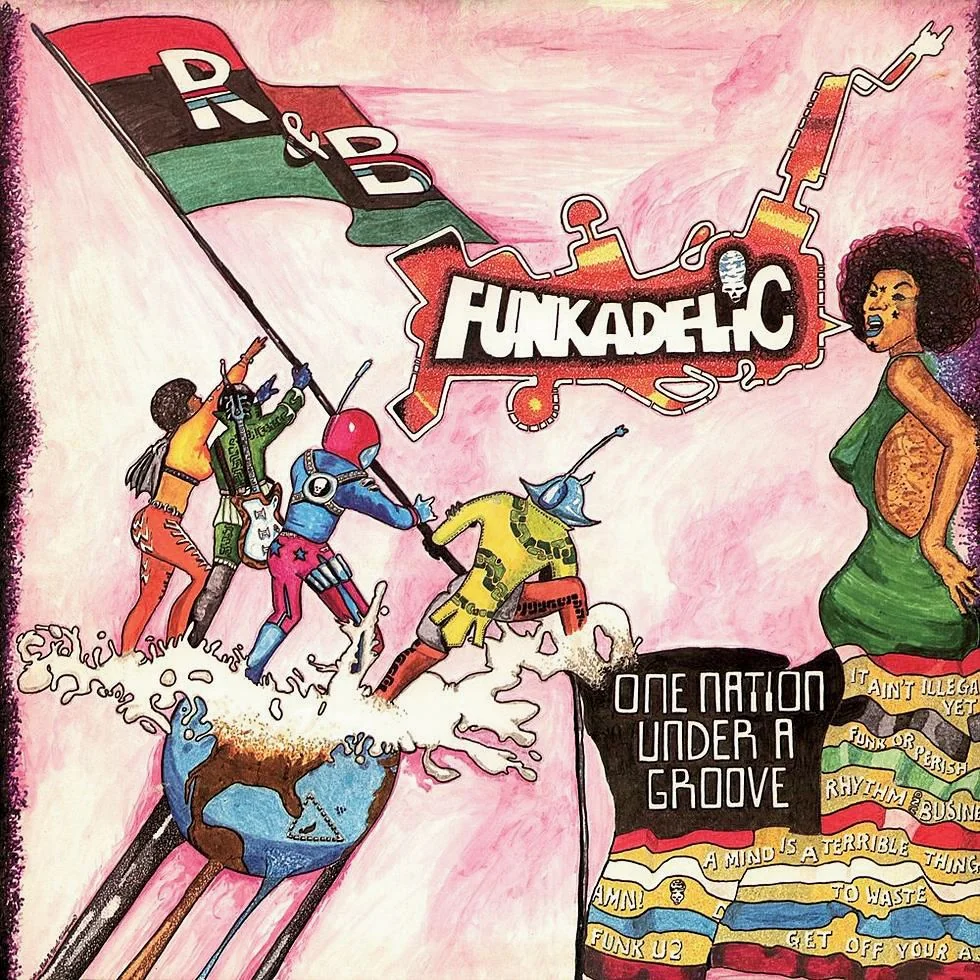
Newsroom | UCLAperiod relationship
Funk mythology cover design
Pedro Bell’s artwork for Funkadelic’s One Nation Under a Groove
Focus on the hand-rendered fantasy space, the theatrical exaggeration, and the way the cover feels like a universe with its own rules.
Shared 1970s funk visual culture, hand-drawn surrealism, playful symbolic world-building, album-cover theatricality
Different more cartoon density, busier typography, less architectural perspective
Image search
Pedro Bell One Nation cover
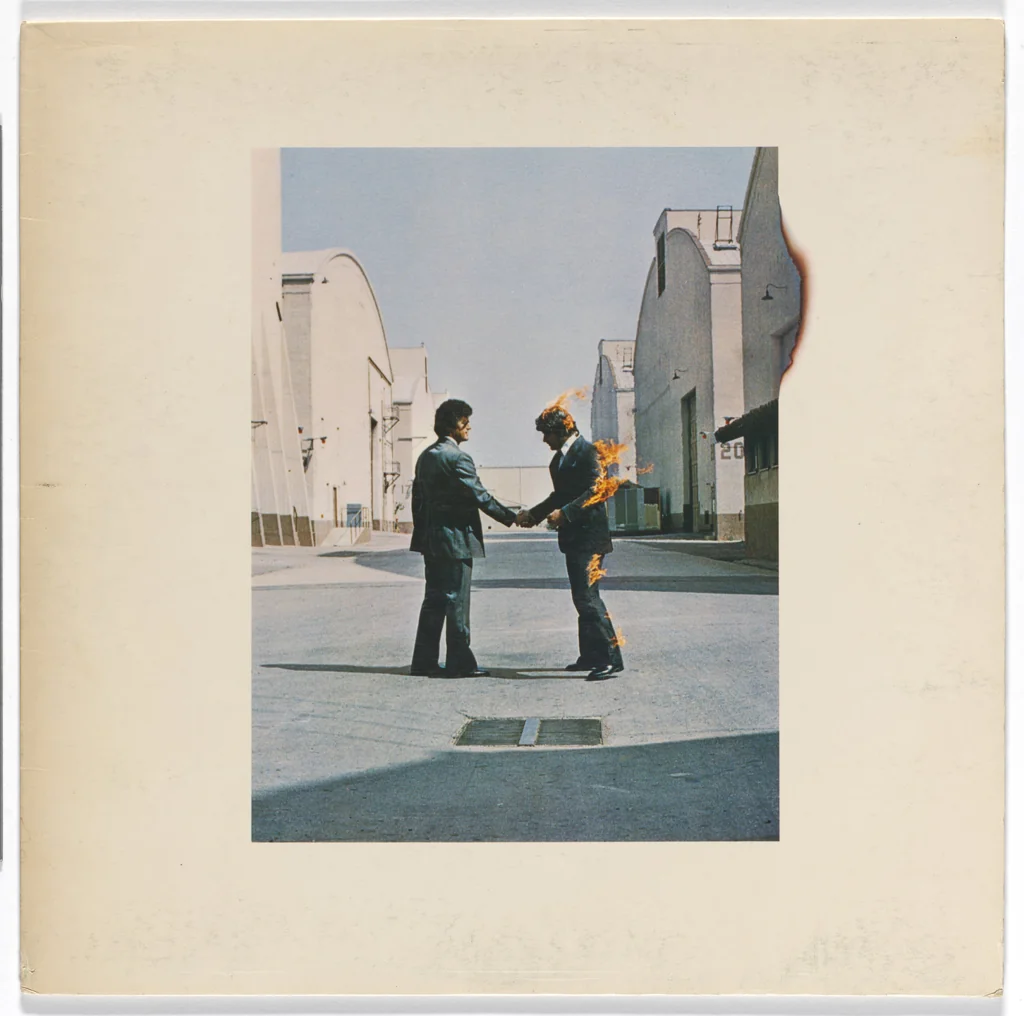
moma.orgmedium reference
Progressive rock surreal album staging
Hipgnosis, cover for Pink Floyd’s Wish You Were Here
Notice the reliance on a memorable central conceit, open space, and a sharply legible visual metaphor designed to be read instantly at LP-cover scale.
Shared conceptual album-cover image, surreal central event, carefully staged space, symbolic visual metaphor
Different photographic execution, minimal color palette, more realist setting
Image search
Hipgnosis Wish You Were Here
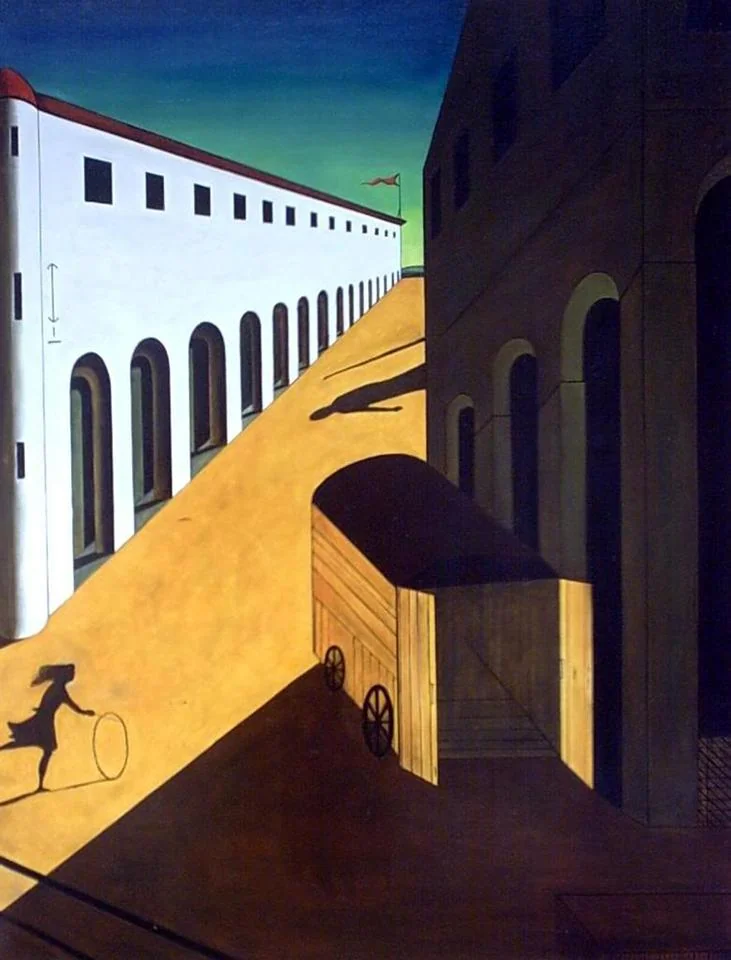
Byron's Muse - WordPress.comcompositional relationship
Metaphysical perspective space
Giorgio de Chirico, The Mystery and Melancholy of a Street
Attend to the deep vanishing lines, the stage-like emptiness, and the way perspective becomes emotional rather than merely spatial.
Shared uncanny architectural depth, theatrical emptiness, strong perspective recession, dreamlike spatial logic
Different muted classical palette, urban arcade setting, less pop-symbolic imagery
Image search
de Chirico Melancholy Street arcade
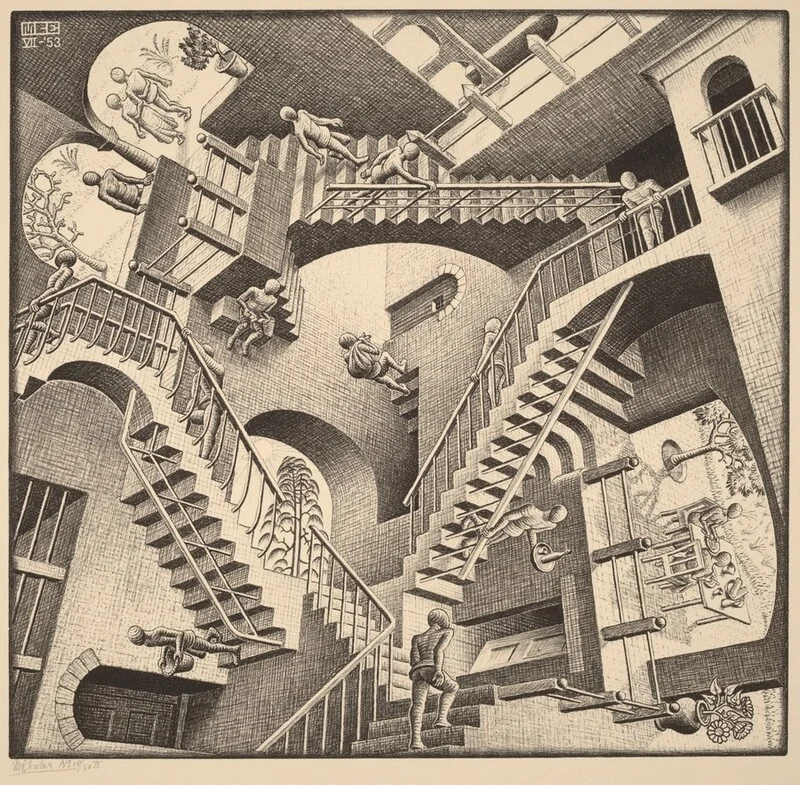
National Gallery of Artformal echo
Impossible space graphic lineage
M. C. Escher, Relativity
Look for the strict grid, the visual pull of receding planes, and the way geometric order becomes a setting for conceptual play.
Shared hard-edged perspective grid, game-like spatial logic, architectural enclosure, optical puzzle quality
Different monochrome printmaking, more mathematical structure, no cosmic funk color
Image search
M C Escher Relativity stairs
formal echo
Surrealist monumental hand imagery
Salvador Dalí, The Hand
Watch how anatomy becomes architecture: the hand is not only a body part but a framing device, a stage prop, and a psychological symbol.
Shared overscaled hand forms, dreamlike bodily symbolism, uncanny central framing, dramatic anatomical emphasis
Different more painterly surrealism, less graphic symmetry, less album-design typography
Image search
Salvador Dali The Hand