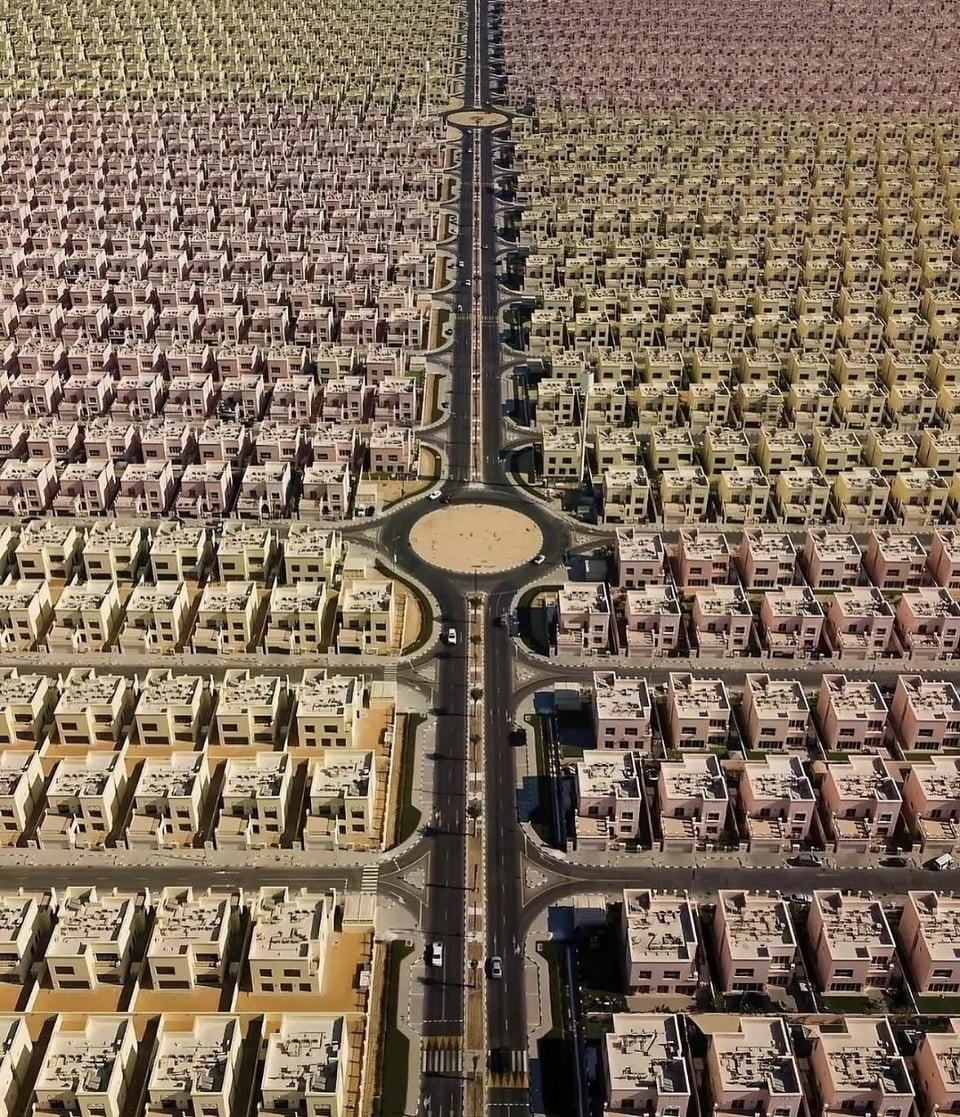
Pastel Grid Suburb From Above
A high, near-orthographic aerial view turns a housing development into a patterned field: rows of nearly identical square villas stretch to the horizon, divided by a dark vertical boulevard and circular roundabouts. The palette is dusty and sun-bleached—cream, sand, pale yellow, and muted pink—while rooftop equipment and shadows create a fine mechanical texture. The mood is orderly, arid, and slightly uncanny, with modular repetition overwhelming individual detail and making the scene read like an urban plan, textile, or mass-produced model.
Visual index
Form box-like housing modulesflat roofsrectilinear blockscircular traffic nodeslong infrastructural spine
Mood systematicariduncannyimpersonalmonumentally repetitive
Color sun-bleached beigedusty pinkpale yellowsand and cream tonesdark asphalt contrast
Texture rooftop mechanical clutterhard sun shadowsconcrete and stucco surfacesfine gridded urban grain
Composition central vertical axisstrict modular gridreceding repetitionroundabout focal pointsnear-orthographic aerial framing
Related images
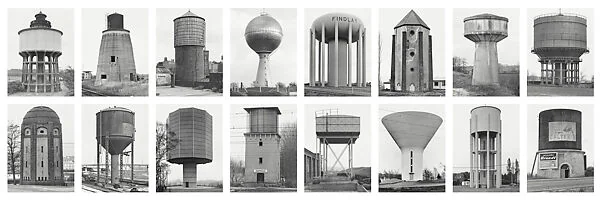
The Metropolitan Museum of Artformal echo
German typological photography
Bernd and Hilla Becher’s industrial typologies, especially water towers and framework houses
Look at how small variations become visible only because the overall structure is so repetitive: roofs, shadows, and facades act like specimens in a grid.
Shared serial repetition, architectural units as specimens, neutral observational distance, emphasis on built-system logic
Different color aerial view, inhabited suburban fabric, less frontal symmetry
Image search
Bernd Hilla Becher Water Towers typology
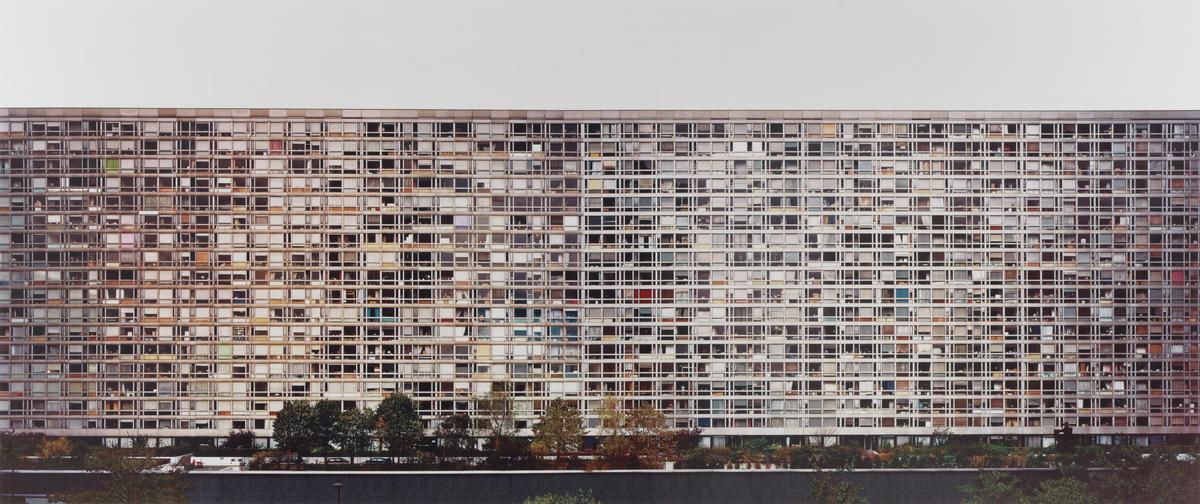
Tatecompositional relationship
Contemporary large scale grid photography
Andreas Gursky’s Paris, Montparnasse
Attend to the flattening effect: depth is reduced so windows, roofs, and blocks become units in a vast all-over pattern.
Shared large-scale repetition, flattened perspective, architectural abstraction, overwhelming density
Different vertical facade instead of aerial plan, cooler urban palette, single building surface
Image search
Andreas Gursky Paris Montparnasse facade grid
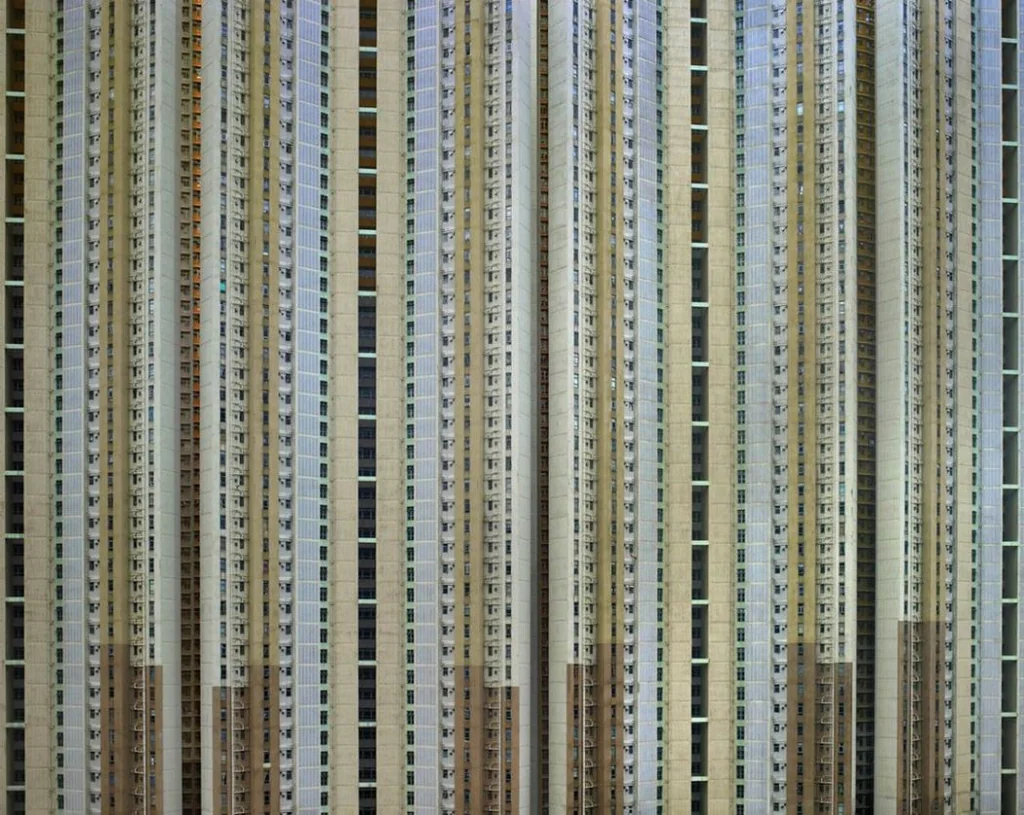
hongkongfp.commedium reference
Architecture of Density photography
Michael Wolf’s Architecture of Density series
Notice how the absence of a clear horizon or human figure makes the built environment feel like a continuous surface rather than a place.
Shared dense housing repetition, minimal human presence, patterned urban surface, systemic impersonality
Different high-rise vertical density, darker metropolitan color, closer facade crop
Image search
Michael Wolf Architecture of Density grid
Posterazzi · In stockcultural lineage
Postwar tract house urbanism
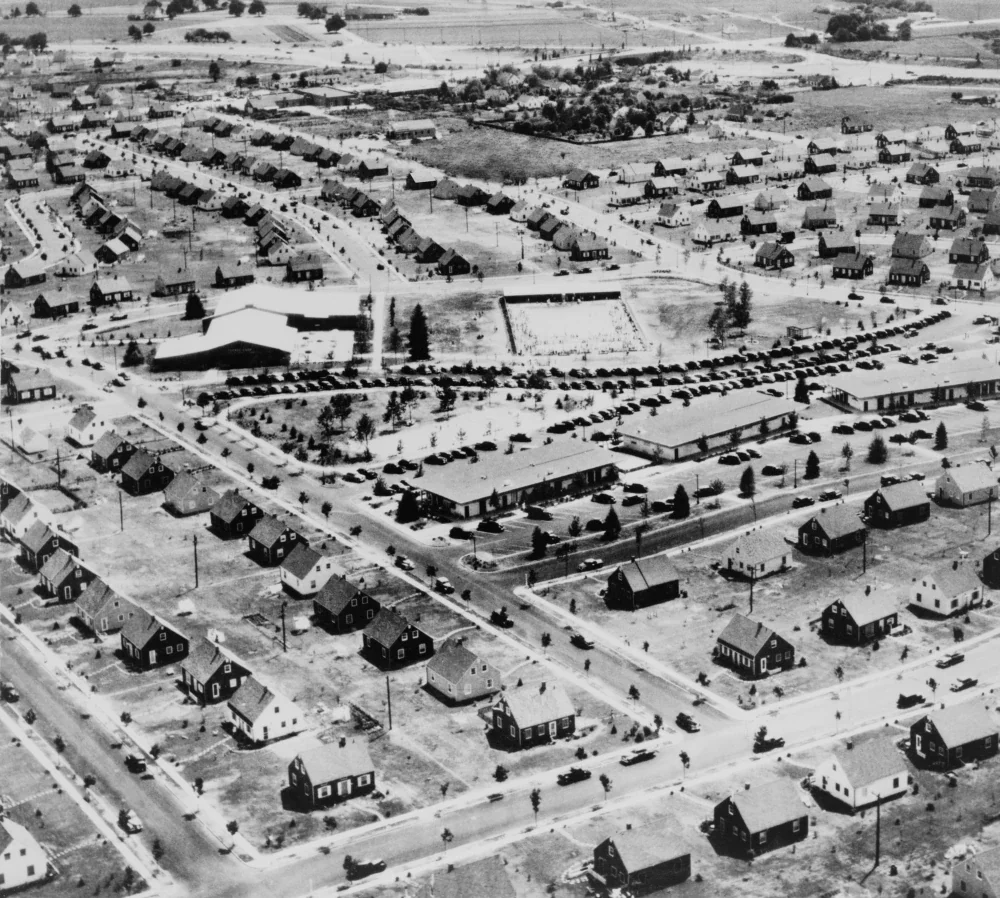
Levittown, Pennsylvania promotional aerial photographs from the 1950s
Compare the way roads organize sameness: the house is less an individual home than a repeatable component in a development system.
Shared standardized housing units, aerial planning view, suburban grid logic, mass-production rhythm
Different greener landscape, pitched-roof houses, postwar American context
Image search
Levitt and Sons Levittown aerial houses
moma.orgperiod relationship
New Topographics landscape photography
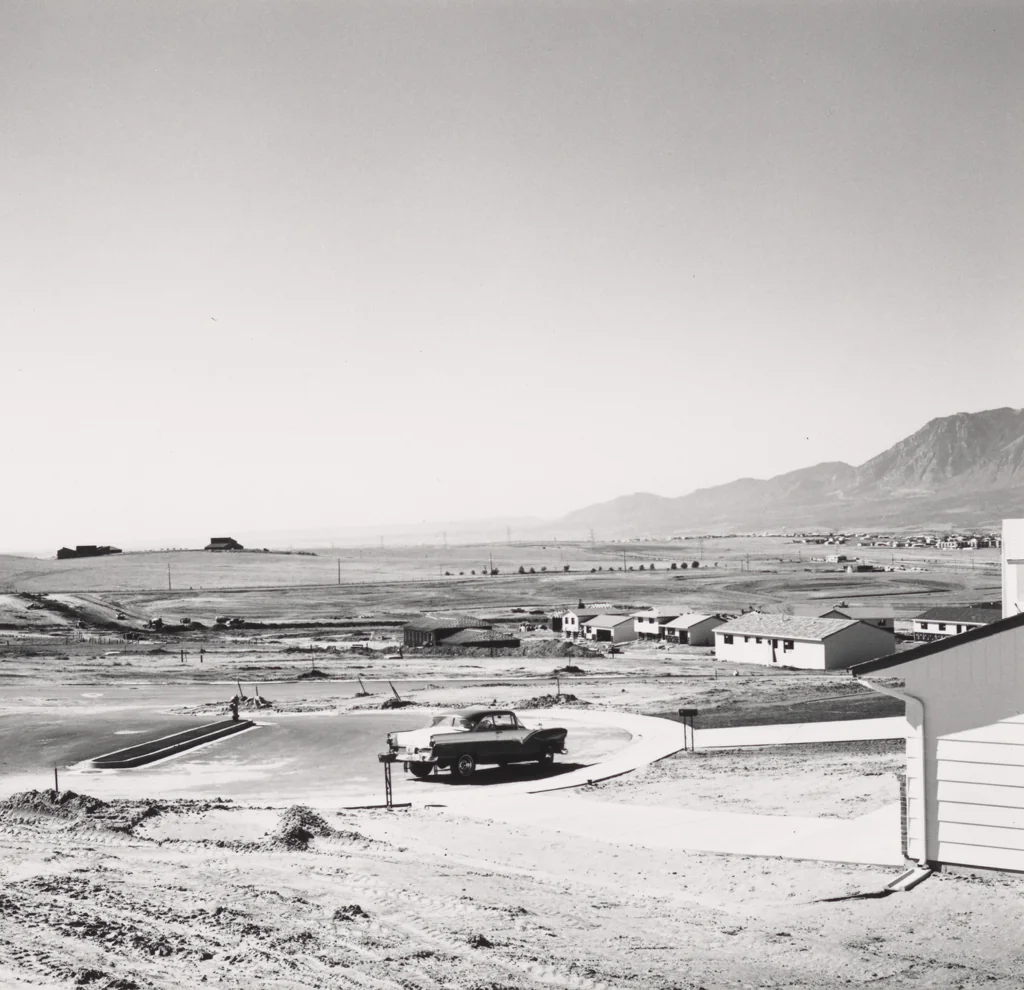
Robert Adams’s photographs of tract houses around Colorado Springs
Look for the deliberate lack of drama: the visual force comes from plain description, hard light, and the accumulated evidence of planning.
Shared detached observational tone, suburban expansion, hard daylight, plain built forms
Different ground-level viewpoint, black-and-white tradition, more open landscape space
Image search
Robert Adams Tract Houses Colorado Springs
SUPERSTUDIOcultural lineage
Radical architecture megastructure
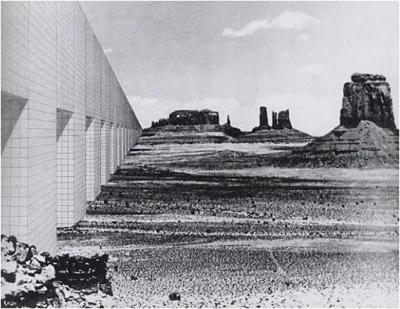
Superstudio’s Continuous Monument collages
Focus on the sensation of a system extending beyond the frame, where architecture becomes a totalizing pattern rather than discrete buildings.
Shared endless grid sensation, desert-adjacent setting, modular order, utopian-dystopian ambiguity
Different speculative collage, monolithic white megastructure, more overtly conceptual
Image search
Superstudio Continuous Monument desert grid
MoMAcontrast reference
Sequential roadside documentation
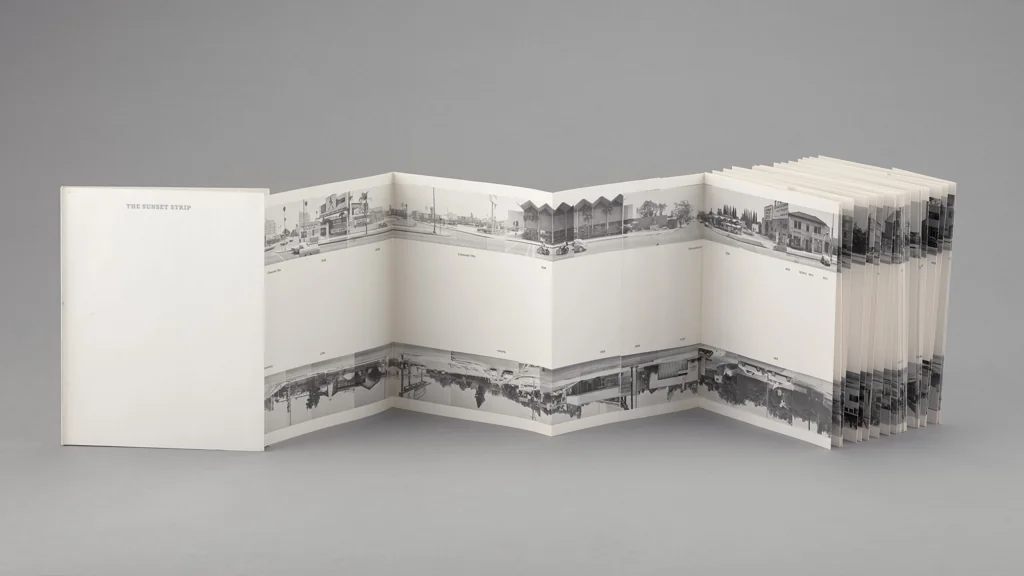
Ed Ruscha’s Every Building on the Sunset Strip
Compare the central boulevard here with Ruscha’s strip: both make architecture subordinate to traffic infrastructure and serial viewing.
Shared road as organizing spine, serial architecture, documentary restraint, urban fabric as sequence
Different street-level lateral format, commercial signage emphasis, book-based presentation
Image search
Ed Ruscha Sunset Strip accordion book